Quick takeaways
- Snaking (augering) breaks through or pulls out a specific clog; hydro jetting scours the entire pipe wall clean with high-pressure water.
- Snaking is ideal for a single isolated blockage like a toy, a hair clog, or roots punching a hole; hydro jetting is best for grease buildup, recurring clogs, and main-line cleaning.
- If a drain keeps clogging after snaking, the pipe walls are still coated — that's a hydro-jetting job.
- Multiple slow drains at once, or sewage backing up, usually means a main-line blockage, not a fixture clog — stop using water and call.
- Skip caustic chemical drain cleaners on recurring clogs; they rarely fix the cause and can damage older pipes.
First: is it one fixture, or your whole house?
Before choosing a clearing method, figure out the scope of the problem, because it tells you how serious it is. A single slow or clogged fixture — one sink, one shower, one toilet — is almost always a localized clog in that fixture's branch line. Annoying, but routine. When several fixtures back up at once, or when using one fixture causes another to gurgle or overflow (flush the toilet and the tub backs up), the blockage is in the main line that carries everything out to the sewer or septic — a much bigger deal.
Main-line blockages need urgent attention because there's nowhere for wastewater to go but back into the house. If you're seeing multiple slow drains, gurgling, or any sewage backup, stop running water and call for drain and sewer service — and if it's actively backing up, our 24/7 emergency dispatch treats it as the urgent problem it is.
| One fixture clogged | Whole-house symptoms | |
|---|---|---|
| What you see | One sink/tub/toilet drains slowly | Several drains slow or backing up at once |
| Tell-tale sign | Other fixtures work normally | Flushing affects another fixture (gurgle/backup) |
| Likely location | That fixture's branch line | The main drain or sewer line |
| Urgency | Routine | Urgent — stop using water |
What is drain snaking (augering)?
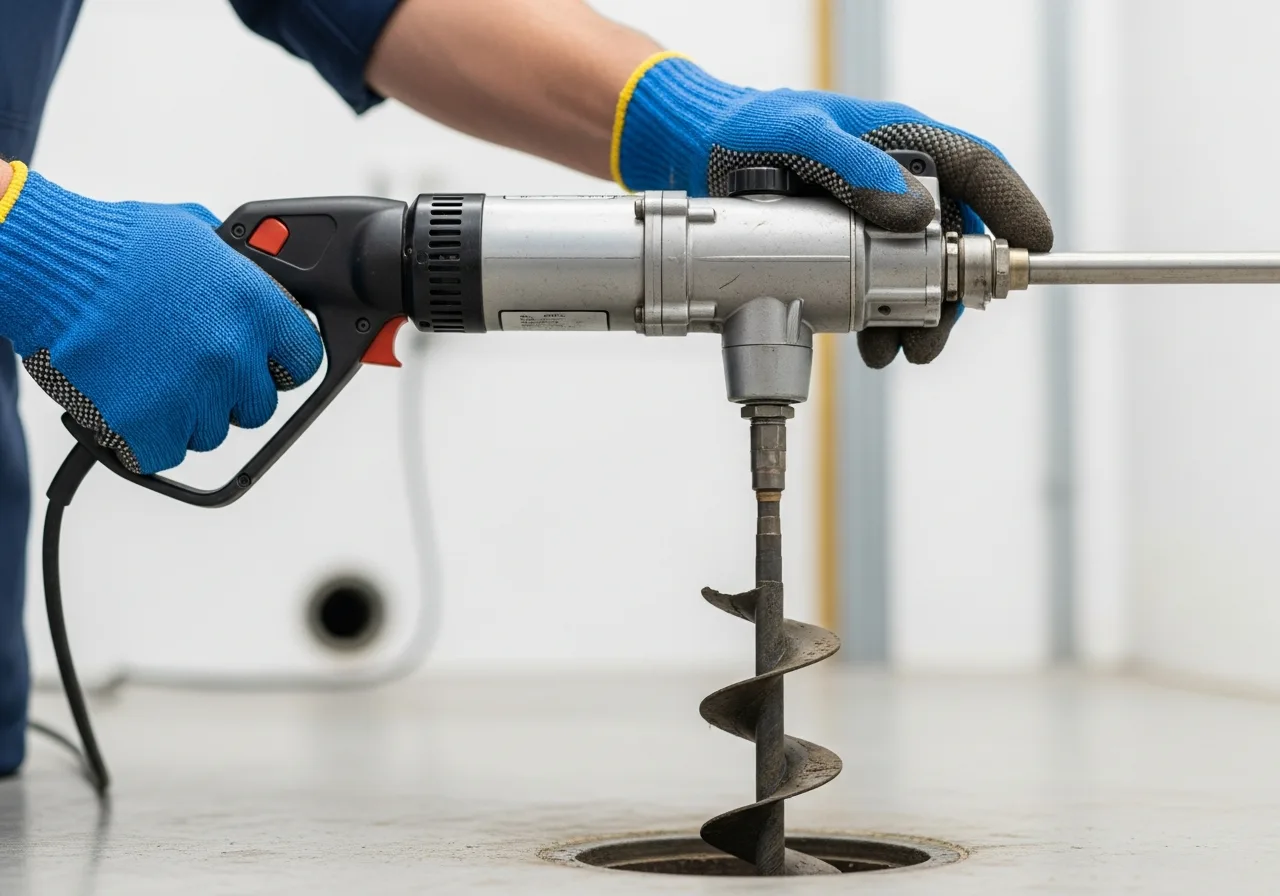
A drain snake — also called an auger or a cable machine — is a long, flexible steel cable fed into the pipe until it reaches the clog. A handheld version handles sink and tub clogs; a powered drum machine drives a much longer, heavier cable down main lines. At the tip, different heads can punch through a soft clog, hook and pull out a mass of hair or debris, or use a rotating cutting head to chew through tree roots that have grown into the line.
Snaking is the right tool when there's a specific, identifiable blockage. It's fast, effective, and the standard first response for a single backed-up fixture or a known obstruction. Its limitation is that it punches a hole through the clog rather than cleaning the whole pipe — so if the pipe walls are coated in grease or scale, snaking restores flow temporarily but the buildup remains and the clog returns. That's the moment to consider hydro jetting instead.
What is hydro jetting?
Hydro jetting clears drains with water instead of steel. A specialized hose with a multi-directional nozzle is fed into the line and blasts water at very high pressure — strong enough to scour grease, sludge, soap scum, mineral scale, and debris off the entire interior wall of the pipe, then flush it all downstream. Where a snake makes a hole through the clog, jetting effectively returns the pipe to near its original inside diameter.
That makes hydro jetting the better choice for recurring clogs, heavy grease accumulation in kitchen lines, and routine cleaning of main and sewer lines. Because it cleans the whole pipe rather than just breaking the blockage, results last far longer. The main caveats: jetting needs proper access (usually a cleanout), and on very old or already-damaged pipes a technician will first camera-inspect the line to confirm it can safely take the pressure. That's why a professional assessment matters before jetting.
Snaking vs. hydro jetting: which does your drain need?
Neither method is universally 'better' — they solve different problems. The right call depends on what's clogging the line, whether it's a one-off or a repeat offender, and the condition of the pipe. Here's how the two compare on the factors that actually matter.
| Drain snake / auger | Hydro jetting | |
|---|---|---|
| How it works | Mechanical cable breaks/pulls the clog | High-pressure water scours the whole pipe |
| Best for | A single isolated clog; roots; quick clear | Grease, recurring clogs, main-line cleaning |
| Result | Punches through the blockage | Cleans pipe walls to full diameter |
| How long it lasts | Shorter if buildup remains | Longer — removes the underlying buildup |
| Best on | Most pipe in reasonable condition | Confirmed-sound pipe (camera first if unsure) |
Warning signs of a serious drain problem
Some drain symptoms are routine; others are early warnings of a main-line or sewer issue that will only get worse. Knowing the difference helps you act before a slow drain becomes a basement backup. If you notice any of the following, it's worth a professional look — ideally with a camera inspection to see exactly what's happening inside the line.
- Several fixtures draining slowly at the same time — a main-line warning, not a fixture clog.
- Gurgling sounds from drains, or one fixture reacting when you use another.
- Recurring clogs in the same drain despite repeated clearing — the pipe wall is still coated.
- Sewage smell from drains, or water/sewage backing up into a tub or floor drain.
- Soggy patches or unusually green grass over the path of your sewer lateral (a possible underground break).
- Drains that slow down after heavy rain — often roots or a partial collapse letting groundwater in.
Why skip the chemical drain cleaner?
It's tempting to reach for a bottle of caustic drain cleaner, and for the occasional minor clog it may help. But for recurring or stubborn clogs, chemical cleaners are a poor choice. They rarely remove the underlying buildup that's causing repeat clogs, the harsh chemicals can corrode older metal pipes and degrade some plastics, and they create a hazard for whoever opens the drain next — including the plumber who eventually has to clear it properly.
A better routine for prevention: hot water and dish soap for light kitchen maintenance, enzyme-based cleaners (which digest organic buildup without harsh chemistry) for ongoing upkeep, and mechanical or hydro-jet cleaning for anything that's actually clogged. Our guides on slow drain causes and fixes and why a drain smells cover the DIY side in more detail.
- Never pour grease or cooking oil down the drain — let it solidify and bin it
- Use sink and tub strainers to catch food, hair, and debris
- Flush only toilet paper — no 'flushable' wipes, which cause main-line clogs
- Run hot water after washing greasy dishes
- Use an enzyme cleaner monthly for maintenance, not caustic chemicals
- Snake or jet recurring clogs properly instead of repeated chemical doses
What drain cleaning costs
Pricing depends on the method, the location of the clog, and how accessible it is. Clearing a single fixture with a snake is the most affordable. Main-line snaking through a cleanout costs more because of the heavier equipment and labour. Hydro jetting is a premium service that costs more up front but delivers a far more thorough, longer-lasting clean — often the better value for grease-prone kitchen lines and recurring main-line clogs. A camera inspection is sometimes added to diagnose or confirm the pipe's condition.
The honest guidance we give every customer: if it's a one-time isolated clog, snaking is the cost-effective fix. If the same drain keeps clogging, paying once for hydro jetting usually costs less than snaking it three or four times. Our drain and sewer cleaning service covers both methods plus camera inspection, and we'll recommend the one that actually solves your problem rather than the one that just buys a few weeks.
$150–$300
Snake a single fixture drain
$250–$550
Main-line snaking (via cleanout)
$400–$900+
Hydro jetting
$250–$500
Drain camera inspection
Related services
Sources & further reading
Need a Kanata plumber?
24/7 dispatch · flat-rate pricing · local crews