Quick takeaways
- Note exactly where water appears and whether it happens with the faucet off, running, or draining.
- A symptom is a clue, not proof of a failed part; faucet designs and parts vary by model.
- If a leak is active, use a local shut-off only if it turns easily—do not force a stuck valve.
- Compare one weak faucet with several affected fixtures before assuming the faucet is the cause.
Faucet repair Ottawa: start with the leak pattern
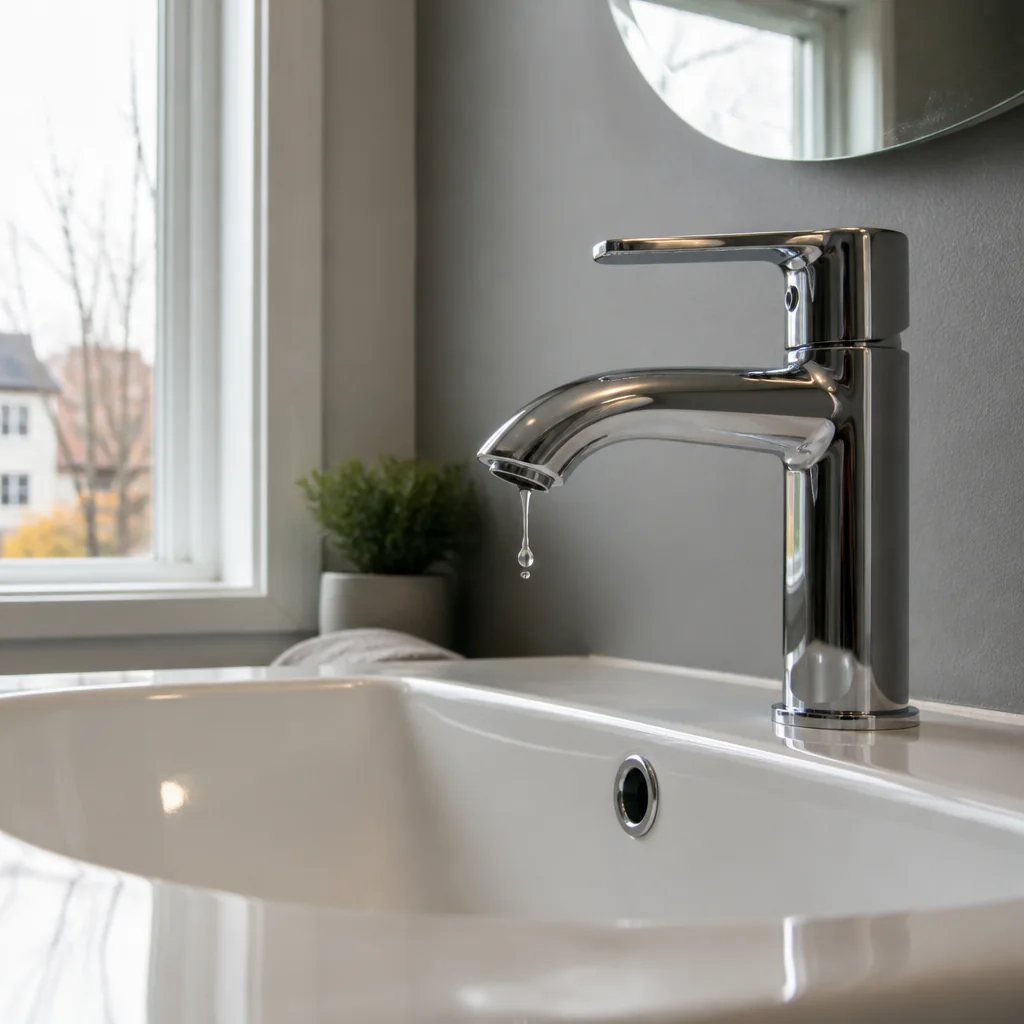
When you need faucet repair in Ottawa, start by describing the pattern before naming a part. Does water drip from the spout after the handle is off? Does the handle or the base become wet only while the faucet is running? Is the cabinet below damp, or does water appear only after the basin drains? Does the stream weaken at one tap, or have several fixtures changed at once? Each answer points to a different area to inspect.
A location-based check is useful because the visible puddle is not always where the leak began. Water can travel along the faucet body, counter, supply tube, or cabinet before it collects. Treat the observations below as clues for a conversation with a plumber, not as a diagnosis or a promise that one specific cartridge or seal has failed.
| What you notice | A useful first clue | |
|---|---|---|
| Spout drips when off | Water keeps forming at the outlet after the handle is closed. | The shutoff parts inside the faucet may not be sealing; the design determines which parts apply. |
| Handle or base gets wet | Moisture appears around the control or faucet body during use. | Water may be escaping higher up and running down; check the handle area before blaming the base. |
| Cabinet becomes damp | Water collects under the basin or near a connection. | Separate supply-side leaks from a drain leak by noting when water appears. |
| One tap has weak flow | Other sinks and showers seem unchanged. | The aerator, faucet cartridge, or local supply valve may be involved. |
| Several fixtures change | More than one tap has low flow or pressure. | Look beyond one faucet; a house-side or municipal supply issue may need checking. |
A drip from the spout after the faucet is off
A brief run-on immediately after shutting off a tap is different from a drip that continues and repeatedly forms new drops. If the spout keeps dripping, the shutoff mechanism inside the faucet may not be closing fully. Depending on the model, that can involve a cartridge, stem, disc, washer, seat, or debris. The symptom narrows the area; it does not identify the replacement part by itself.
Write down whether the drip is constant or intermittent, whether it changes when you move the handle, and whether it comes from the hot side, cold side, or both on a two-handle faucet. Avoid forcing a stiff handle or taking apart a faucet while the water is on. Delta’s model-specific guide to a single-handle faucet dripping from the spout illustrates why the correct troubleshooting steps depend on the faucet design and model.
If you have the manual, model number, or purchase paperwork, keep it nearby. The manufacturer’s parts diagram can help identify the faucet, but ordering a part based only on appearance is risky: two similar-looking faucets may use different internal components. If the model is unknown or the local shut-offs are unreliable, a plumber can identify the faucet and confirm the repair before parts are changed.
Water around the handle or faucet base
Water around a handle can travel down and collect at the base, making the lower area look like the source. Dry the faucet exterior, then watch where moisture returns during a brief normal use. Do not reach into moving parts or remove a handle to test it. Moen’s bathroom-faucet base-leak guide specifically notes that a handle leak can run onto the base plate, so tracing the highest wet point matters.
If water appears around the base only when the faucet runs, the cause could still be inside the faucet or at the connection to the sink; a puddle at the counter does not distinguish those. Note whether the spout swivels, whether the leak appears with hot water, cold water, or either, and whether it stops when the faucet is off. These observations are more useful than guessing that a visible ring of mineral scale is the leak.
For a two-handle faucet, note which handle was used when the moisture appeared. For a pull-down kitchen faucet, record whether the leak is around the spout, hose, or cabinet below. Keep the description simple and specific. If you are replacing the faucet rather than repairing it, check the sink opening and mounting style first; the faucet service page describes the repair and installation work available in Kanata.
A wet cabinet: faucet, supply line, or sink drain?
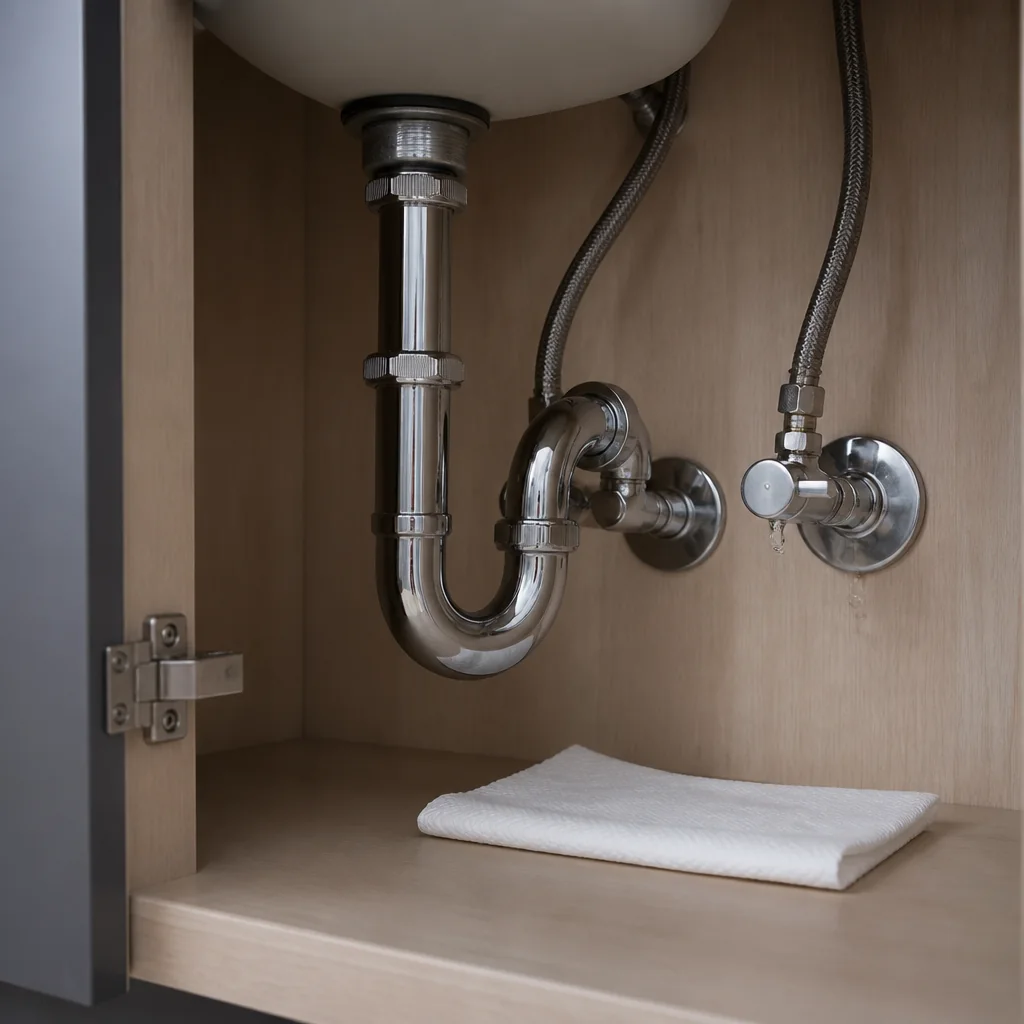
Water under a sink is not automatically a faucet leak. It may come from a supply connection that is wet when the tap is on, a drain joint that leaks when water leaves the basin, or water that has run down from the countertop. Dry the cabinet floor and the visible pipes, then watch from a safe distance during a short faucet run. If the cabinet stays dry until the basin is emptied, the drain path deserves attention; if a connection becomes wet while water is supplied, tell the plumber that timing.
You can place a dry paper towel beneath a visible joint to make new moisture easier to spot, but do not tighten corroded fittings, put tools on a valve that will not turn, or work around electrical equipment in a wet cabinet. If the water is spreading, stop using the fixture and close its shut-off only if the handle moves freely. For help distinguishing a tap issue from a basin or drain problem, see the sink plumbing service in Kanata.
If you cannot identify the source, take a photo before moving stored items and another after the water appears. Mention whether the sink was running, full, or draining. Those details help separate a faucet-body repair from work on the connections or drain assembly without opening parts unnecessarily.
Weak flow at one faucet versus several fixtures
Compare the affected faucet with another tap before assuming the house has a pressure problem. If only one faucet has a weak or uneven stream, the aerator, cartridge, or local supply valve could be involved. If hot flow is weak but cold flow is normal—or the reverse—record that difference. If several fixtures have changed, especially at the same time, the cause may be upstream from the faucet.
A sudden change after plumbing work can also be worth mentioning, as a nearby valve may not be fully open. Check only handles you can reach and operate without force. If a shut-off is seized, leaking, or visibly corroded, stop and have it assessed rather than trying to free it with a wrench. The low-water-pressure guide for Kanata homes walks through the difference between a single-fixture symptom and a wider pressure change.
Mineral buildup can collect at a faucet outlet and affect flow, but scale is not the only possible cause. Ottawa-area water conditions and the faucet’s age vary by home; a crusty aerator does not prove the whole fixture needs replacement. Our Kanata water-hardness guide covers the local mineral-scale context. If flow changes across multiple rooms, do not keep removing faucet parts—the broader supply should be diagnosed.
Repair or replace: what changes the decision?
The best choice depends on the faucet’s condition and the actual failed component, not just the fact that it is dripping. A repair may make sense when the faucet body is sound and the correct part is available. Replacement may be more practical if the body is cracked or badly corroded, parts cannot be identified, the handle or mounting hardware is failing, or another repair would still leave a worn fixture in service. A plumber can inspect the specific model and explain both options where they are reasonable.
Include the shut-off valves and supply connectors in that conversation. A faucet can be straightforward to remove when the local valves turn and the connections are in good condition; seized valves, corroded fittings, or cramped access can change the work. Do not approve a faucet-only scope if the cabinet already has active moisture without asking whether the source has been identified.
For a useful quote, ask what part or condition is being repaired, whether labour and the replacement part are included, what would change the quoted scope, and whether the old faucet is being removed and disposed of. Compare written quotes by scope rather than assuming one price is right for every home.
Make a safe first check and prepare for the call
If water is actively escaping, place a container or towel to limit spread only if it is safe to do so. Close the local shut-off valve only if it turns easily and does not start leaking. If it will not move, do not force it; if water continues, use the home’s main shut-off if you can reach it safely and contact a plumber. Keep water away from outlets and electrical equipment. A persistent spray, a growing leak, or water reaching a finished floor is more urgent than an occasional drip contained in the basin.
Before calling, note the faucet brand and model if visible, which side or fixture is affected, when the leak happens, whether other taps have changed, and whether the under-sink valves work. Take a short video of the symptom and a photo of any label, but do not leave a running leak unattended to collect evidence. This helps the technician arrive with a clearer picture without asking you to dismantle the faucet.
In Glen Cairn, the local service-area page notes aging shut-off valves among the plumbing issues homeowners may encounter. If an under-sink valve feels stuck, mention it when you book rather than waiting until the faucet is removed. For a repair assessment in Ottawa, Plumbing Now’s plumbing repair service is the client page most closely matched to a leaking household faucet.
- Where the first moisture appears: spout, handle, base, cabinet, or floor.
- Whether it leaks while off, running, or draining.
- Whether hot, cold, or both sides are affected.
- Whether one faucet or several fixtures have weak flow.
- Faucet brand or model, if it is visible without disassembly.
- Whether the local shut-off valves turn freely.
Sources & further reading
Need a Kanata plumber?
24/7 dispatch · flat-rate pricing · local crews