
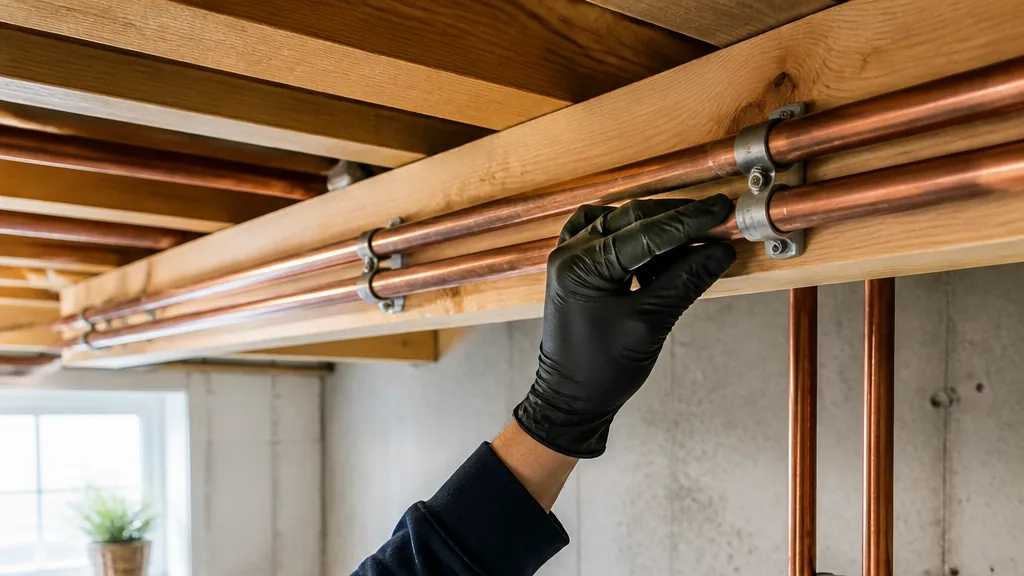
Quick takeaways
- A single thud just as a faucet, washer, or dishwasher valve closes may be water hammer, a pressure shock in the supply line.
- A rattle during flowing water can instead come from a loose pipe, a vibrating valve, or contact with framing; sound alone does not identify a failed pipe.
- Note which fixture triggers the noise, whether it happens on hot or cold, and whether there is any leak or pressure change.
- Do not force shut-off valves, open walls, or adjust a pressure regulator based only on a noise. Get a plumbing diagnosis if the banging is strong, new, or recurring.
What water hammer sounds like in a home
Water hammer is a pressure shock that can occur when moving water stops suddenly. It may sound like a sharp thud or knock in a supply pipe. Vibration travels through connected piping and framing, so the loudest spot is not always the source.
Timing is a useful clue. One knock immediately after a faucet or appliance valve closes can be water hammer. Rattling during flow, or light taps as a fixture starts, may point to a loose support, vibrating valve, or another issue. The pattern helps describe the problem but cannot confirm it.
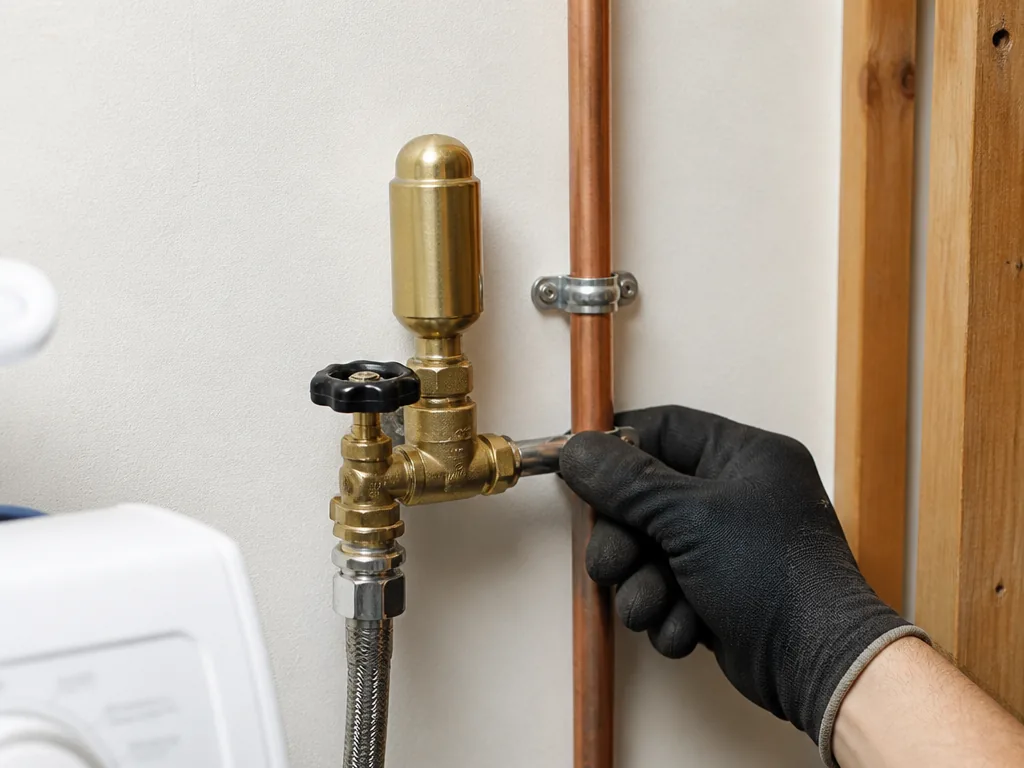
Watts says arrestors absorb shock when quick-closing valves stop flow, including dishwasher and clothes-washer valves. An arrestor is not the answer to every bang: loose supports and pressure problems need different fixes.
Pipe repair Ottawa: begin with the timing, not a guess
Before arranging pipe repair in Ottawa, note what happened just before the sound: a washer filling, a toilet stopping, or a tap closing. The trigger helps a plumber test the right branch instead of guessing from where the bang seems loudest.
If safe and there is no leak, compare the timing at one fixture. Note hot or cold water, one impact or repeated vibration, and whether other taps changed pressure. Do not keep provoking a loud bang to record it.
A pressure change at several fixtures needs a broader check than noise from one appliance. The Kanata low-water-pressure guide explains the difference. A short video from a dry, safe location may help describe the timing; do not dismantle a valve.
| What you notice | What to note for diagnosis | |
|---|---|---|
| One thud as a tap closes | A quick stop in flow may be creating a pressure shock. | Which tap, hot or cold, and whether the sound is immediate. |
| Bang at the end of a washer cycle | A quick-closing appliance valve is one possible trigger. | Whether it happens at fill, wash, or shut-off. |
| Rattle while water is running | A loose support or vibrating valve may be moving. | Whether the pipe is visible and if the vibration changes with flow. |
| Noise at several fixtures | The cause may be upstream of one fixture. | Any pressure change and which rooms are affected. |
| Gurgle from a drain | The sound may be in the drainage system, not the supply pipe. | Which fixture is draining and whether nearby drains are slow. |
Why plumbing pipes bang after water stops
A sudden stop in flow is the classic water-hammer pattern, but several parts of a home’s plumbing can contribute. A plumber checks the fixture, valve, pipe route, and supports before recommending a repair.
A noise isolated to the washer may point to that branch or valve; one heard after several unrelated fixtures stop may justify checking pressure and supports. Recent renovations are useful context because they can change pipe routes and valve types.
An arrestor is not a universal cure. Watts and Sioux Chief describe its use with quick-closing valves, but product choice and placement follow the manufacturer’s instructions. Pressure issues, moving pipes, and leaking joints need their own corrections.
- Quick-closing valves: washing machines, dishwashers, ice makers, and some faucets can stop flow abruptly. Watts notes that arrestors are used to absorb this kind of shock.
- An absent, failed, or poorly located arrestor: the device must suit the installation and be placed according to its manufacturer’s instructions. Adding one at random may not address the source.
- Pipe movement: a pipe that is loose, rubbing framing, or contacting another hard surface can knock when pressure changes or water moves through it.
- Pressure-control or valve trouble: unusually high or fluctuating pressure, a worn fixture valve, or a pressure-reducing valve that is not working as intended needs testing rather than guesswork.
- A different noise being mistaken for hammer: thermal expansion, a drain gurgle, or a pump vibration can sound like a pipe fault but needs a different response.
Safe checks before calling a plumber
Keep checks visual: from a dry area, note movement, a detached visible strap, or moisture on exposed pipes. Do not reach into a wet cabinet, move an appliance with tight hoses, or inspect near standing water.
For a washer or dishwasher, note which cycle stage triggers the sound and whether a hose or valve visibly vibrates. Do not disconnect hoses, tighten old valves, or add fittings as a test; a stuck shut-off can leak if forced.
Do not adjust the pressure regulator or partly close the main shut-off to quiet a bang. If you already know how to use a suitable pressure gauge safely, record the reading and timing; otherwise leave pressure testing to the plumber.
- The fixture or appliance that was running.
- Whether the sound came at start-up, during flow, or at shut-off.
- Hot, cold, or both lines; one room or several.
- A single thud, repeated knock, rattle, or gurgle.
- Any visible movement, moisture, pressure change, or recent plumbing work.
- Whether an accessible shut-off valve is stuck or visibly corroded—do not force it.
How to tell water hammer from other plumbing sounds
A knock after supply flow stops can be water hammer, but sound travels and can mislead. Ticking during hot-water use may be thermal movement; a gurgle from a sink, tub, or floor drain points to the drainage system instead.
A pump may hum while running, a loose pipe may tap during flow, and a worn valve may chatter at one tap. New or loud noise paired with a leak or flow change needs assessment, even if it stops.
Mention if the noise began after a cold snap or thaw. A frozen or thawing line can pose a separate risk, especially if flow changes or dampness appears; see the Kanata frozen-pipe guide.
| Sound pattern | Possible direction to investigate | |
|---|---|---|
| Single bang at shut-off | Supply-side water hammer is possible. | Identify the valve that just closed. |
| Rattle during steady flow | Pipe support, contact, or a vibrating valve. | Look only at exposed, dry piping. |
| Tick or creak during heating | Thermal movement may be involved. | Note if it tracks hot-water use or appliance heating. |
| Gurgle as a fixture drains | Drainage rather than supply may be involved. | Watch for slow drainage or more than one affected fixture. |
When to arrange pipe repair in Ottawa
Arrange an assessment if banging is strong, recurring, affects several fixtures, or continues after the appliance stops. A plumber can check pressure, valves, supports, and arrestor placement. Have new stains or unexplained dampness assessed promptly.
A bang alone does not prove a broken pipe or the need for repiping. Concern rises with visible water, a sudden flow change, a valve that will not shut off, or forceful pipe movement. Stop using the fixture if practical; do not open a wall to search.
If water is actively escaping, close an accessible valve only if it turns freely and you can reach it safely. Keep clear of electrical equipment and do not enter standing water near energized devices. For a noise without a leak, a scheduled diagnosis may be appropriate; if damage is actively developing, use the site’s emergency guidance instead.
- Water is spraying, spreading, or appearing in a ceiling, wall, or cabinet.
- Several fixtures lose pressure or the water flow changes suddenly.
- A pipe visibly shifts, a fitting is wet, or the noise is getting louder.
- A shut-off valve leaks, will not turn, or cannot safely isolate the affected fixture.
What a plumber checks and which repairs may help
If safe, a plumber reproduces the noise and identifies the fixture, valve, and pipe section involved. They may test pressure, inspect supports and valves, and check whether an arrestor is present near the quick-closing source.
A loose pipe may need support; an appliance valve may need service; a correctly selected arrestor may be installed near the source; or pressure-control equipment may need testing. A leaking or deteriorated section may need replacement.
Ask the plumber to connect the recommendation to what was observed: which valve triggered the noise, where an exposed pipe moved, or what pressure test indicated a problem. If an arrestor is proposed, ask why that location and product suit the source. A written scope should distinguish diagnosis, parts, testing after the repair, and any wall access or restoration.
Noise alone does not prove every pipe is failing. The copper-versus-PEX repiping guide covers material choices if replacement is warranted. Ask what was tested, what evidence supports the fix, and how it will be checked.
Ottawa homes: sound does not identify pipe material
Ottawa-area homes have different layouts and materials, often changed by renovations. In established Kanata neighbourhoods such as Glen Cairn, visible basement piping may not reveal what is behind a finished wall. A bang cannot identify the material or age of a hidden line.
One appliance may need a local valve or support correction; recurring leaks or corrosion call for a broader assessment. Home age is context, not proof of what is installed. If piping work is diagnosed, see residential pipe repair and re-piping in Kanata.
For an outside repair option, Plumbing Now’s Ottawa plumbing repair service matches household pipe and fixture diagnosis. Describe the symptom and timing; sound alone cannot determine the repair.
Related services
Sources & further reading
Need a Kanata plumber?
24/7 dispatch · flat-rate pricing · local crews