Quick takeaways
- First, find where it's leaking from — the tank, the bowl base, the supply line, or internally into the bowl. Each has a different fix.
- The most common (and cheapest) cause is a worn flapper letting water trickle from the tank into the bowl — often silent and surprisingly wasteful.
- Water on the floor at the base usually means a failed wax ring or loose tank-to-bowl bolts — fixable, but don't leave it, because it damages the subfloor.
- A simple food-colouring test tells you in 15 minutes whether your tank is leaking into the bowl.
- Persistent base leaks, a cracked tank or bowl, or a rocking toilet are jobs for a plumber before water damage spreads.
First step: find out WHERE it's leaking from
Almost every toilet repair goes wrong because people fix the wrong thing. 'My toilet is leaking' can mean four completely different problems with four different solutions. Before you buy a single part, spend five minutes pinpointing the source — it's the most important step in the entire job.
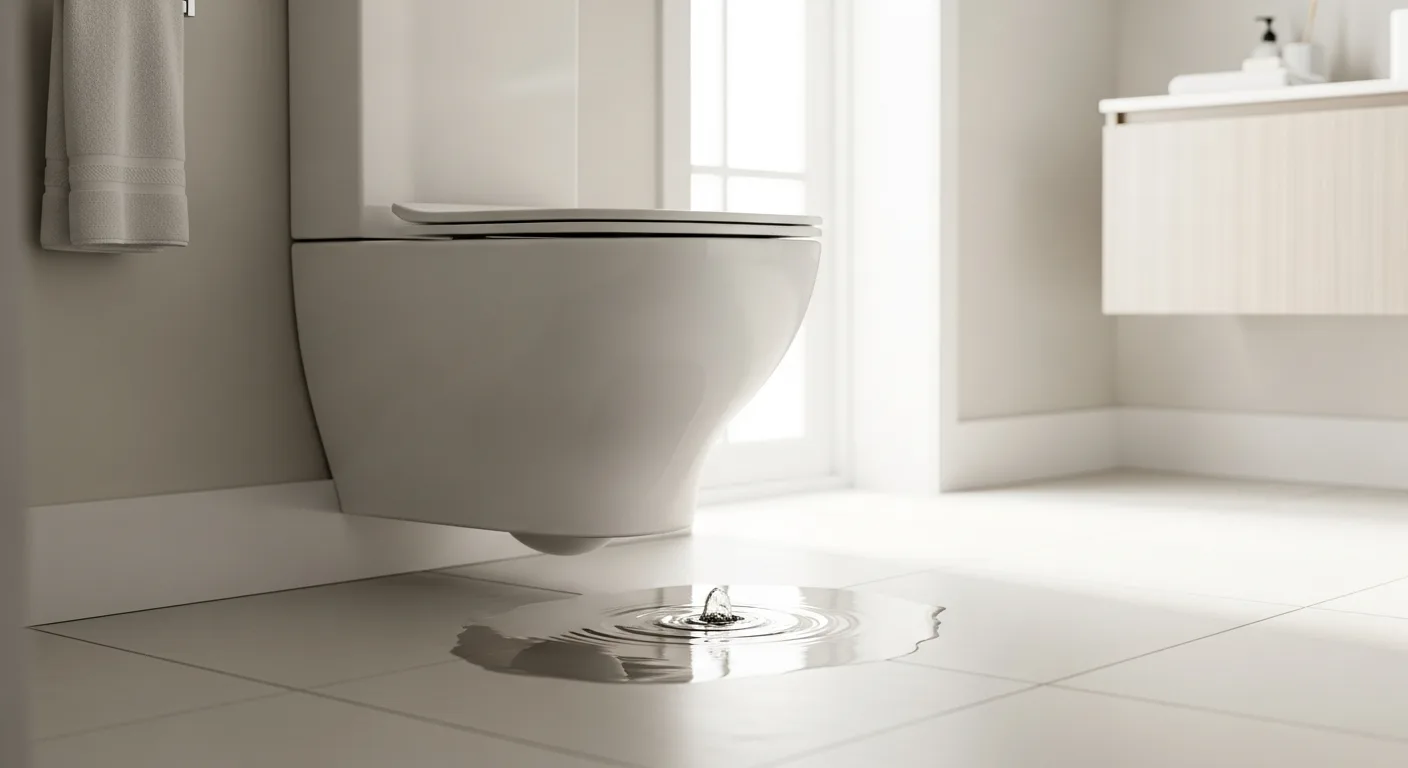
There are four places a toilet leaks, and you can usually tell them apart just by looking. Water on the floor around the base points to the wax seal or tank bolts. A constantly running or refilling bowl means water is leaking internally from the tank into the bowl. A puddle near the wall behind the toilet usually means the supply line or fill valve. And a wet, sweating tank in summer may just be condensation, not a leak at all.
| What you see | Most likely cause | |
|---|---|---|
| Water on the floor at the base | Failed wax ring or loose tank-to-bowl bolts | Stop using it; risk of subfloor damage |
| Bowl keeps refilling / phantom flushes | Worn flapper leaking tank into bowl | Cheapest, most common fix |
| Drip at the wall / behind toilet | Supply line or fill valve / shutoff | Often a fitting or washer |
| Wet tank exterior in summer | Condensation, not a leak | Usually harmless |
The 15-minute test that finds a silent tank leak
The most common toilet leak is also the sneakiest: a worn flapper that lets water seep from the tank into the bowl. There's often no sound and no puddle — just a water bill that creeps up and a toilet that 'ghost flushes' or hisses occasionally. The US Environmental Protection Agency estimates a silently leaking toilet can waste hundreds of litres of water a day, which adds up fast on an Ottawa water-and-sewer bill.
Here's the test every homeowner should know: take the tank lid off, add a few drops of food colouring (or a dye tablet) to the tank water, and wait 15–20 minutes without flushing. If coloured water appears in the bowl, your flapper is leaking and needs replacing. It's a five-minute, low-cost fix and the single highest-value repair on this list.
- 1
Add dye to the tank
Put a few drops of food colouring or a dye tablet into the water in the tank (not the bowl).
- 2
Wait 15–20 minutes
Don't flush. Let it sit so any seepage has time to show.
- 3
Check the bowl
If the bowl water has turned colour, water is leaking past the flapper from the tank.
- 4
Replace the flapper
A universal flapper is inexpensive and swaps out in minutes. If it still leaks, suspect the flush valve seat.
Cause 1: A worn or warped flapper
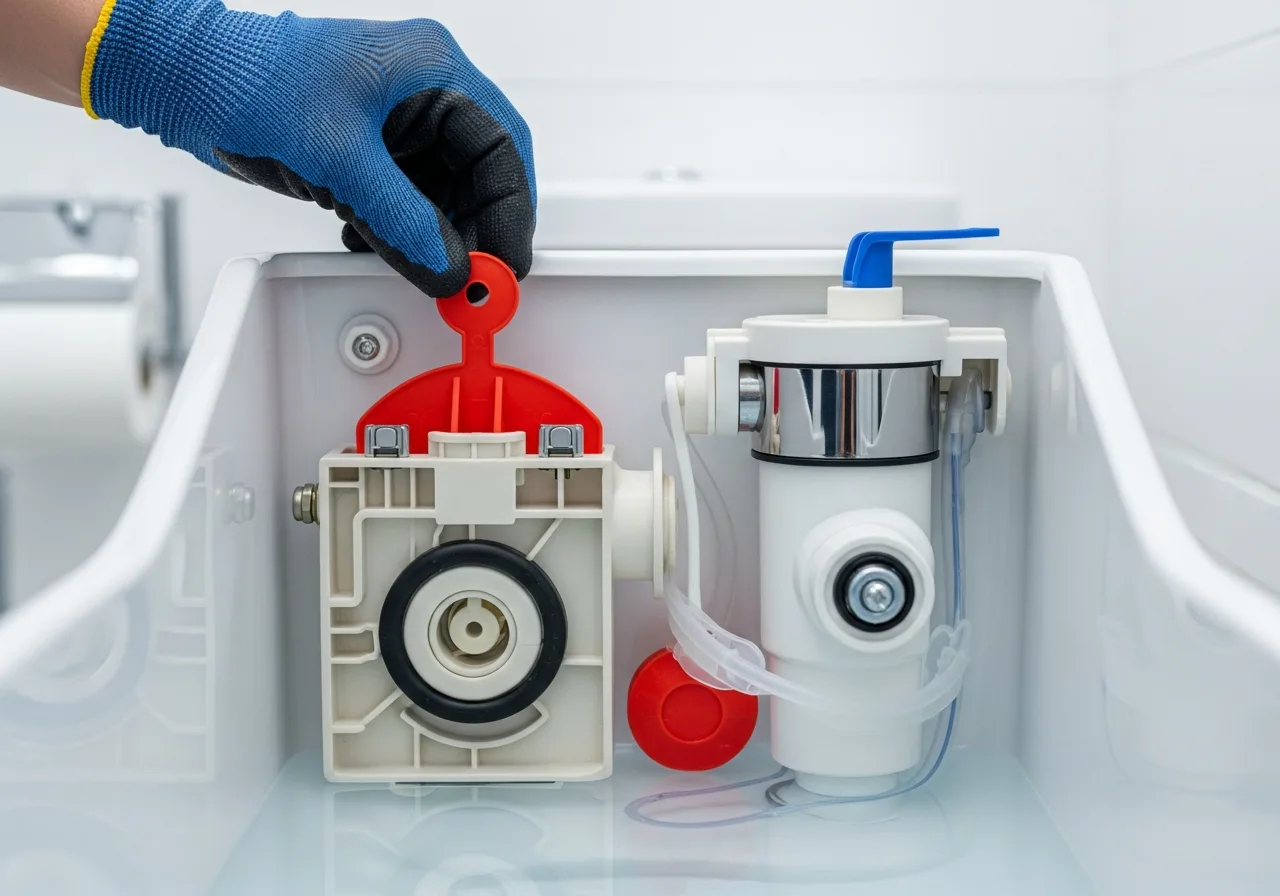
The flapper is the rubber seal at the bottom of the tank that lifts when you flush and drops back to hold water. Over a few years it hardens, warps, or develops mineral buildup — and stops sealing. The result is that slow, silent leak into the bowl, a fill valve that kicks on periodically to top the tank back up, and sometimes a toilet that won't build a strong enough flush.
Replacing a flapper is the most beginner-friendly plumbing repair there is: shut the supply, flush to empty the tank, unclip the old flapper, clip on a universal replacement, and reconnect the chain with a little slack. If a new flapper doesn't solve it, the plastic flush-valve seat it sits on may be pitted or scaled — a slightly bigger job. A toilet that keeps running after a flapper swap is covered in detail in our running toilet fix guide.
Cause 2: A faulty fill valve
The fill valve is the tall assembly that refills the tank after a flush and shuts off when the float reaches the set level. When it fails, it either won't shut off completely — so water trickles continuously into the overflow tube and down into the bowl — or it leaks from the top where the supply connects. Either way you'll often hear a faint, near-constant hiss.
If your water is running into the overflow tube, first try lowering the float so the water stops below the top of the tube. If that doesn't fix it, a modern replacement fill valve is inexpensive and installs in 15–20 minutes. A toilet that constantly refills is wasting water around the clock, so it's worth addressing promptly even though it's not dramatic.
Cause 3: Water at the base — the leak you can't ignore
Water pooling on the floor around the bottom of the toilet is the most important leak to act on. The usual cause is a failed wax ring — the seal between the toilet's base and the drain flange in the floor. When it fails, water (and sometimes sewage) escapes onto the floor every time you flush, and because much of it goes under and behind the toilet, it can rot the subfloor or leak into the ceiling below long before you notice.
Two other things cause base leaks: loose tank-to-bowl bolts (the leak looks like it's at the base but is actually dripping down from the tank connection), and a toilet that rocks because it isn't bolted down tightly or the flange has failed. A rocking toilet will destroy a wax ring repeatedly, so the rock has to be fixed too. Replacing a wax ring means pulling the toilet, which is doable for a confident DIYer but is where many people choose to call us — if the flange itself is broken or the subfloor is soft, it becomes a bigger repair best done right the first time.
- The floor around the toilet feels soft or spongy
- The toilet rocks or shifts when you sit down
- You've replaced the wax ring and it's leaking again
- There's a stain on the ceiling in the room below
- You see cracks in the porcelain bowl or base
- There's any sewage smell with the leak
Cause 4: The supply line and shutoff valve
The flexible supply line runs from the shutoff valve on the wall to the bottom of the tank. Leaks here show up as a drip or puddle near the wall behind or beside the toilet. The culprit is usually a loose connection, a worn washer, or an old braided line that has corroded. Hand-tightening the connections (gently — overtightening cracks the plastic nuts) fixes many of these; if not, a new braided stainless steel supply line is a cheap, quick replacement.
The shutoff valve itself can also weep, especially older multi-turn valves that haven't been touched in years. If yours drips from the stem or won't fully stop the water, replacing it with a modern quarter-turn valve is a worthwhile upgrade — and it makes every future toilet repair easier because you'll actually be able to shut the water off cleanly.
What toilet repairs cost — and when DIY makes sense
The good news is that the most common toilet leaks are inexpensive to fix. A flapper or fill valve is a low-cost part and a beginner-level job. A supply line is similarly cheap. The cost climbs when the toilet has to come off the floor — a wax ring replacement, a broken flange, or a cracked toilet that needs to be replaced entirely.
DIY is reasonable for flappers, fill valves, float adjustments and supply lines. Bring in a plumber when the toilet is leaking at the base after a wax-ring attempt, when the floor or flange is damaged, when the porcelain is cracked, or when you simply want it done once and done right. Our toilet installation and repair service covers everything from a quick reseal to a full replacement, and if a leak is actively flooding, we offer 24/7 emergency dispatch across Kanata.
$10–$30
Flapper or fill valve (DIY part)
$150–$300
Wax ring reseal (plumber)
$250–$500
Flange repair / re-set
$400–$900+
Full toilet replacement, installed
Why fixing a toilet leak quickly matters
A leaking toilet is rarely an emergency in the dramatic sense — but it's almost always costing you something. A silent tank leak quietly inflates your water bill month after month. A base leak does something worse: it works on the subfloor and joists out of sight, and by the time the damage is visible, you're often looking at flooring and structural repairs far beyond the cost of a wax ring.
If your toilet is one of two related problems — leaking and also flushing poorly — it's worth reading our companion guide on why a toilet won't flush properly, since a weak flush and a tank leak often share the same worn flapper or low water level. Catch it early, test it properly, and most toilet leaks are a quick, cheap fix.
Sources & further reading
Need a Kanata plumber?
24/7 dispatch · flat-rate pricing · local crews