Quick takeaways
- A failing well pump almost always warns you first — sputtering taps, dropping pressure, rapid on/off cycling, or suddenly cloudy water.
- Most submersible well pumps last 8–15 years; jet pumps and the pressure tank have their own separate lifespans you need to track.
- Many 'pump' failures are actually a waterlogged pressure tank, a worn pressure switch, or a tripped breaker — far cheaper to fix than a new pump.
- If you've lost water completely, check the breaker and the pressure switch before assuming the pump is dead.
- Rural wells need a pump correctly sized to the well's depth and the home's demand — an undersized or wrong-type pump burns out years early.
How a well pump system actually works
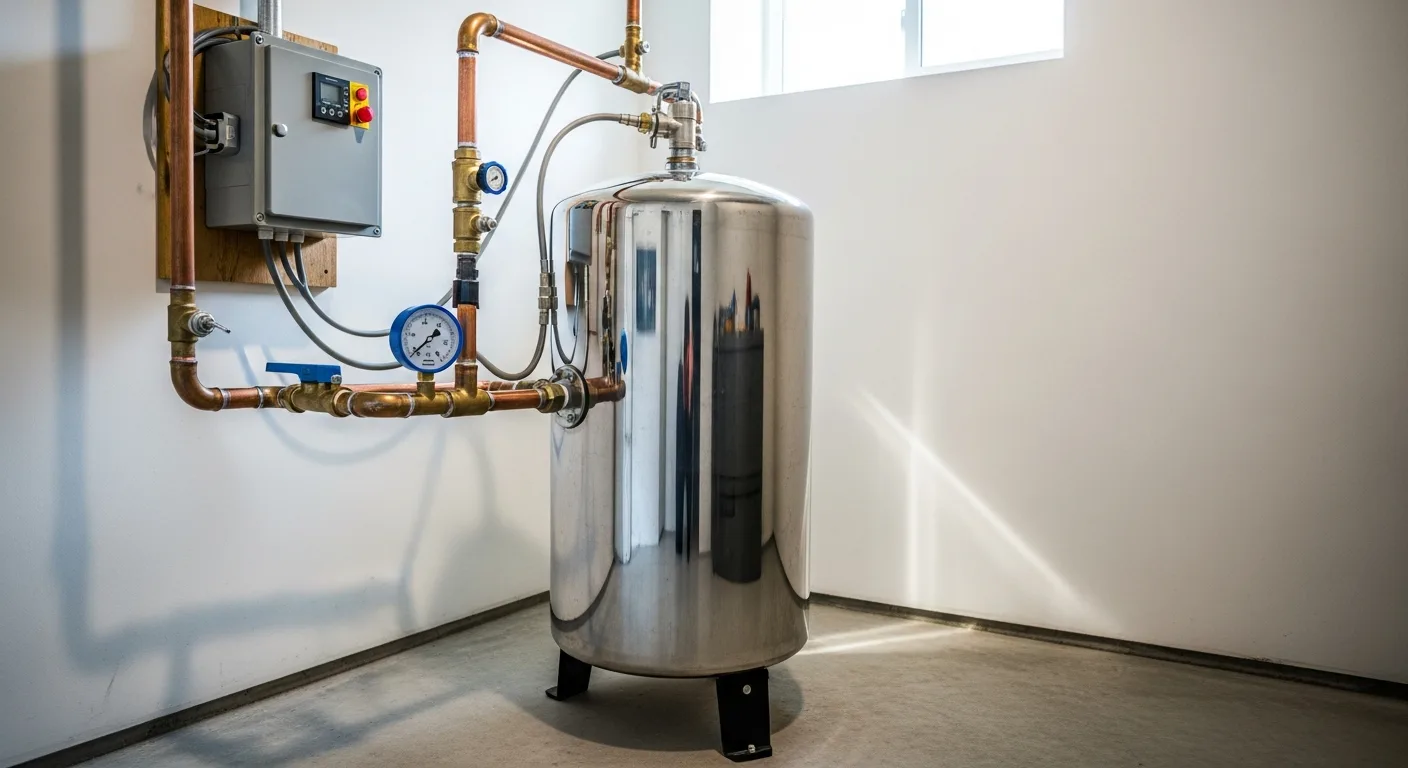
If your home is on a private well, every drop of water you use is delivered by a pump and held at usable pressure by a pressure tank. Understanding the three core parts — the pump, the pressure tank, and the pressure switch — is the single best thing you can do to diagnose a problem before it becomes a no-water emergency.
The pump is what physically moves water out of the ground. There are two common types in the Ottawa Valley. A **submersible pump** sits at the bottom of a deep drilled well, fully underwater, and pushes water up to the house — this is by far the most common setup for the deep bedrock wells around Carp, Dunrobin and Constance Bay. A **jet pump** sits above ground (usually in the basement or a well pit) and draws water up by suction; it's typically used on shallower dug or bored wells. If you want a deeper technical comparison, our Ottawa partner has a useful breakdown of jet pumps versus submersible well pumps.
The pressure tank stores a buffer of pressurized water so the pump doesn't have to switch on every single time you open a tap. Inside, a rubber bladder separates water from a cushion of compressed air. The pressure switch is the brain: it turns the pump on when pressure drops to a set point (commonly 40 psi) and off when it reaches the upper limit (commonly 60 psi). When people say 'my well pump is broken,' the actual culprit is very often the tank or the switch — not the pump itself.
| Jet pump | Submersible pump | |
|---|---|---|
| Location | Above ground (basement / well pit) | Submerged at bottom of the well |
| Best for | Shallow dug or bored wells | Deep drilled bedrock wells (most of rural Ottawa) |
| Typical lifespan | 8–10 years | 10–15 years |
| Noise | Audible — you hear it run | Silent — it's underground |
| Repair access | Easy — it's right there | Requires pulling the pump up the well |
7 warning signs your well pump is failing
Well pumps rarely die without warning. Catching these signs early is the difference between a planned $300–$600 repair and an emergency replacement on a holiday weekend. If you notice any of the following, it's worth a call before it gets worse:
- Air spitting and sputtering from your taps — a classic sign the pump is drawing air, the water level is dropping, or there's a leak in the drop pipe.
- Steadily falling water pressure throughout the house, especially noticeable in the shower or when two fixtures run at once.
- The pump short-cycles — switching on and off rapidly every few seconds — which usually points to a waterlogged pressure tank.
- You can hear the pump running constantly and never shutting off (for a jet pump or a basement-mounted system).
- Cloudy, sandy, or muddy water that wasn't there before — the pump may be sitting too low or pulling sediment.
- Your electricity bill jumps with no other explanation — a struggling pump runs far longer and harder than a healthy one.
- No water at all, or water that comes and goes — often the pressure switch, a tripped breaker, or a failed pump.
How long do well pumps last?
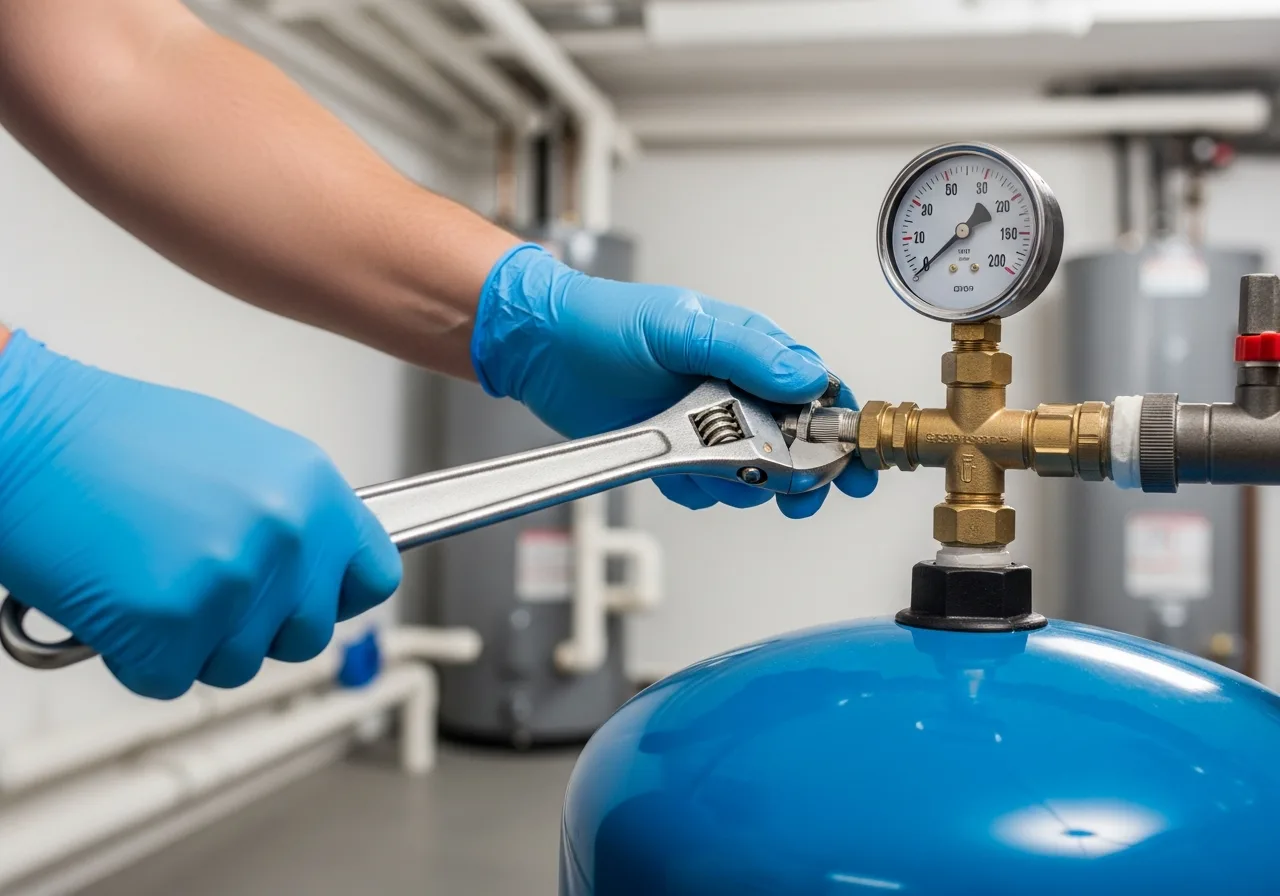
This is the question we get most often, and the honest answer is: it depends on the type, the quality of the original install, your water chemistry, and how hard the pump has to work. That said, there are reliable averages. A quality submersible pump in a properly sized system typically lasts 10–15 years. Jet pumps tend to run 8–10 years. The pressure tank often outlives the pump at 10–15 years, but a cheaper tank or one with a failed bladder can give out in 5.
Rural Ottawa has a few local factors that shorten pump life. Hard, mineral-heavy groundwater is common across the region and scales up pump components over time — the same hardness you may already be managing with a softener (see our Kanata water hardness guide). Wells that run low in late summer make the pump work harder and pull sediment. And an undersized pump that's forever struggling to keep up with a growing household's demand will always die young.
10–15 yrs
Submersible well pump
8–10 yrs
Above-ground jet pump
10–15 yrs
Pressure tank
3–5 yrs
Pressure switch
Common well pump problems — and what's really causing them
Before anyone quotes you for a new pump, the failure should be properly diagnosed. Pulling a submersible pump out of a 150-foot well is expensive, and it's a waste if the actual problem is a $40 pressure switch. Here are the issues we find most often, in roughly the order we check them.
- 1
Check power first
A tripped breaker, blown fuse, or failed pressure switch accounts for a surprising number of 'dead pump' calls. Always the cheapest thing to rule out.
- 2
Read the pressure gauge
It tells us instantly whether the system is holding pressure, short-cycling, or flat at zero — each points to a different culprit.
- 3
Test the pressure tank
A waterlogged tank with a failed bladder makes the pump cycle constantly and burns it out. We check the air charge before condemning the pump.
- 4
Check the switch and wiring
Burnt or corroded contacts on the pressure switch mimic a pump failure exactly. They're a quick, inexpensive replacement.
- 5
Only then, the pump itself
If power, tank and switch all check out, we test the pump's amperage and resistance to confirm before recommending a pull.
Well pump repair vs. replacement: when each makes sense
Not every problem means a new pump, and not every old pump is worth saving. As a rule of thumb: if the pump is under about 7 years old and the failure is in a peripheral part (switch, tank, wiring, a leaking fitting), repair almost always wins. If the pump itself has failed and it's already 10+ years old, replacement is usually the smarter spend — pulling a deep submersible is the bulk of the labour cost, so it rarely pays to put an old, near-end-of-life pump back down the same hole.
We also factor in whether the original pump was correctly sized. If your household has grown — finished basement, extra bathroom, irrigation — an undersized pump that's been straining for years should be upsized rather than replaced like-for-like. When the time comes, our well pump service in Kanata and rural Ottawa covers diagnosis, repair, and full replacement with a correctly sized pump.
- The pump is 10+ years old and the motor has failed
- It's already been pulled and repaired once before
- The pump was undersized for your current water demand
- You're getting persistent sediment from a pump sitting too low
- Repair quotes approach 50% of replacement cost
- You're on an obsolete pump with no available parts
What does well pump repair cost?
Costs vary with the type of failure and the depth of the well, but here are realistic ranges for the Ottawa area so you're not caught off guard. A pressure switch replacement is typically the cheapest fix. A new pressure tank is a mid-range job. A full submersible pump replacement on a deep well is the most expensive because of the labour to pull and re-set the pump and drop pipe.
The single biggest cost driver for a submersible is well depth — a pump 80 feet down is far less labour than one at 200 feet. This is exactly why correct diagnosis matters so much: confirming the problem is a switch or tank can save you the entire cost of a pump pull. We always diagnose before we quote, and we give you the repair-versus-replace numbers side by side so you can decide.
$150–$350
Pressure switch replacement
$500–$1,200
Pressure tank replacement
$1,200–$2,500+
Submersible pump replacement
Free
Diagnosis with any repair
The part everyone forgets: the pressure tank
If we could give rural homeowners one piece of advice, it would be this: stop blaming the pump and start checking the tank. A waterlogged pressure tank — one where the internal bladder has failed and lost its air charge — is the most common reason a healthy pump cycles itself to death. The tank can no longer store a buffer, so the pump kicks on for every small water draw, sometimes several times a minute. That relentless cycling is what actually kills the pump.
You can often hear it: a rapid click-hum-click-hum every time someone runs a tap. Replacing a failed tank (or recharging the air on a tank that still has a good bladder) is a fraction of the cost of a pump, and doing it promptly protects the pump you already have. It's the highest-value maintenance check on the whole system.
No water right now? Do this before you call
Losing water completely is alarming, but it's not always the pump. Before you assume the worst, run through a few quick checks — sometimes you'll have water back in five minutes, and if not, you'll give us a head start on the diagnosis.
- Check the breaker for the well pump — a tripped breaker is the single most common cause of sudden no-water. Reset it once; if it trips again immediately, stop and call us.
- Look at the pressure gauge. Zero pressure with the pump not running points to power or the switch; pressure that won't build points to the pump or a leak.
- Tap the pressure switch cover gently — corroded contacts sometimes stick. (Don't open it; there's line voltage inside.)
- Check for an obvious leak — a burst line downstream of the tank will keep the pump from building pressure.
- If none of that restores water, call us for 24/7 emergency service in Kanata and the rural west end. Going without water is treated as urgent.
Well water around Kanata: a local note
The communities just west and north of Kanata — Carp, Dunrobin, and the rural edges of Stittsville — are overwhelmingly on private wells drilled into limestone and granite bedrock. That means deep submersible pumps, hard mineral water, and seasonal water-table swings that all affect pump life. Ontario regulates private wells under the provincial wells regulation, and it's worth knowing your responsibilities as a well owner for water testing and maintenance.
If you're on a well, two pieces of routine care pay for themselves many times over: have the pressure tank's air charge checked every couple of years, and address hard water with the right treatment so scale doesn't shorten the life of your pump, water heater, and fixtures. Our guide on choosing a water softener vs. a filter is a good place to start, and Health Canada publishes clear guidance on private well water quality.
Related services
Sources & further reading
Need a Kanata plumber?
24/7 dispatch · flat-rate pricing · local crews