Quick takeaways
- Shut off the water first — at the fixture valve if the problem is local, at the main valve if you're not sure.
- If water is near outlets, panels, or light fixtures, cut power to the affected area before stepping in.
- Open the lowest taps in the house to drain pressure once the main is off.
- Move valuables up, photograph everything for insurance, and contain water with towels — not your hands on the pipe.
- Find and test your main shut-off valve today, before you ever need it at 2 a.m.
First 60 seconds: stop the water
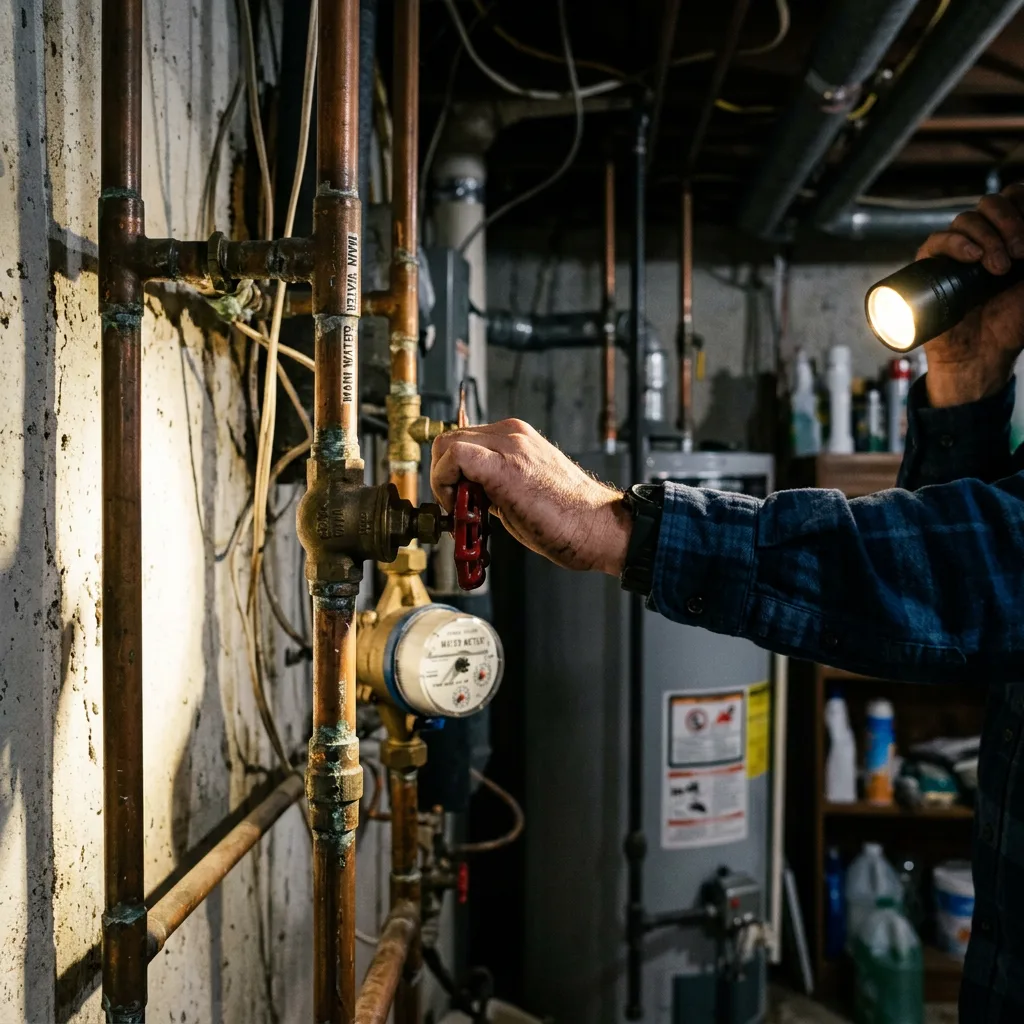
Every plumbing emergency starts the same way: water is going where it shouldn't, and every minute adds damage. Your first move is always the same — cut off the supply. For a single overflowing or leaking fixture, use the local shut-off: the small oval valve on the supply line under a sink or behind a toilet. Turn it clockwise until it stops.
If the leak is inside a wall or ceiling, if it's a burst pipe, or if you simply don't know where the water is coming from — go straight to the main shut-off valve and close it. In most Kanata homes, the main is in the basement where the water line enters, usually on the front wall of the house near the water meter, often close to the floor. In newer builds in Arcadia or Richcraft Trails it's typically a quarter-turn ball valve (lever handle); older homes in Beaverbrook often have a round gate valve that takes several full turns — and may be stiff if it hasn't moved in years.
- 1
Shut off the water
Local valve for one fixture; main valve for a burst pipe or unknown source. Clockwise closes.
- 2
Kill power if needed
Water near outlets, cords, or the panel? Shut the breaker to the affected area before stepping into any water.
- 3
Drain the pressure
With the main off, open the lowest cold taps in the house to empty the lines and stop residual flow.
- 4
Contain and move
Towels and buckets on the water; furniture, rugs, boxes and electronics up and away.
- 5
Document, then call
Photos and video of the source and the damage — then call the emergency plumber with the details ready.
Electricity and water: the safety check that comes before everything
Before you wade into a flooded laundry room to rescue anything, stop and look at what the water is touching. If it has reached outlets, power bars, extension cords, appliances, or is dripping through a ceiling light fixture, treat the water as energized until proven otherwise. Go to your electrical panel — assuming the route to it is dry — and shut off the breakers for the affected area, or the main breaker if you're unsure which circuits are involved.
If the panel itself is in standing water, do not touch it. Stay out, call Hydro Ottawa to disconnect service, and tell the plumber when you call. No possession in the basement is worth an electrical injury, and every emergency crew would rather arrive to a dark, dry-shoes scene than the alternative.
Drain the system and limit the spread
Once the main valve is closed, there's still water sitting in every pipe in the house, and gravity will keep feeding the leak until it's empty. Open the cold taps at the lowest point of the house — a basement laundry sink is ideal — and flush a toilet on the lowest floor. This drains the remaining pressure out through the fixtures instead of through the hole in your pipe. If the leak is on the hot side, do the same with hot taps, and turn your water heater to vacation mode or off so it isn't heating an emptying tank.
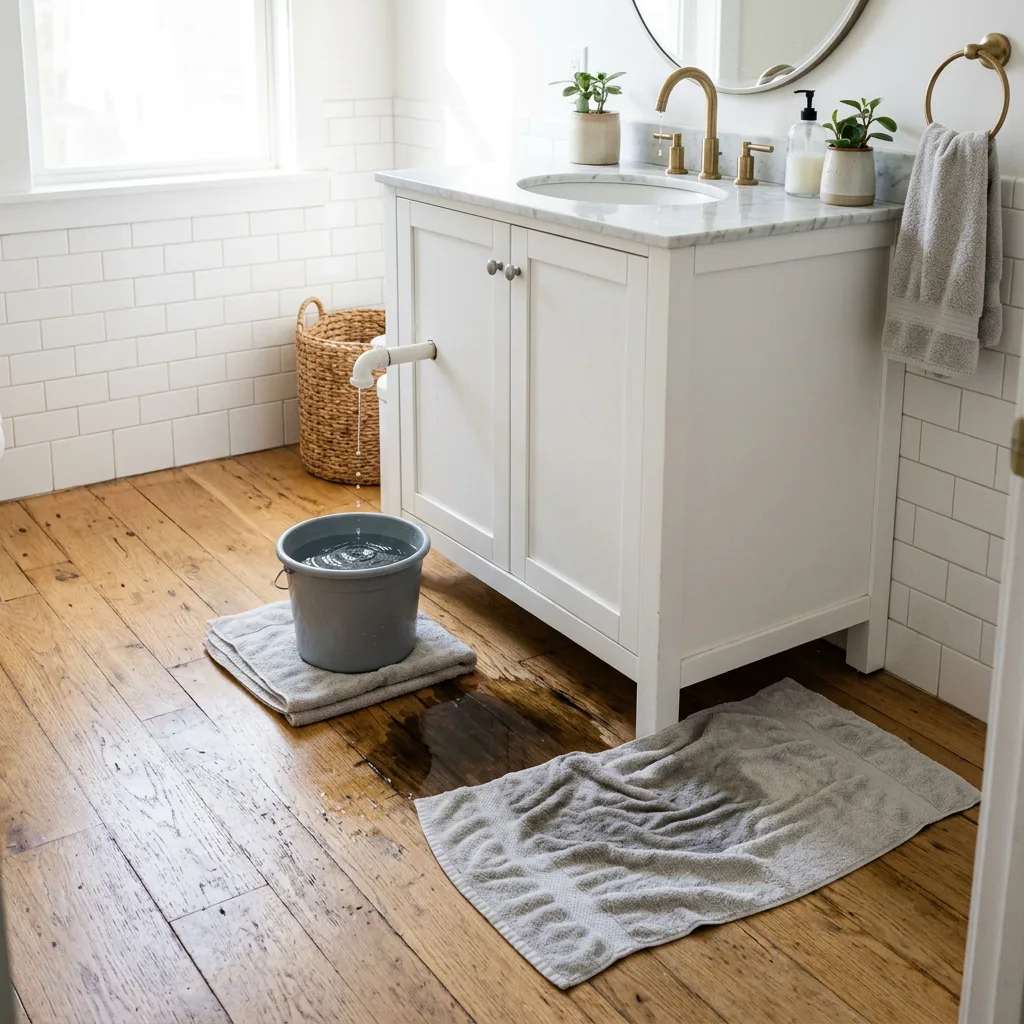
Now slow the water that's already loose. Towels rolled into dams steer water away from finished rooms and floor vents. Buckets catch active drips — and for a bulging ceiling, place the bucket first, then poke a small hole in the centre of the bulge with a screwdriver to let the water drain in a controlled stream. It feels wrong, but a controlled drain through a small hole beats an uncontrolled ceiling collapse.
Move what matters, then document everything
With the water stopped and contained, spend the next few minutes on triage. Move electronics, documents, photo albums, rugs, and anything on the floor to higher ground. Prop furniture legs on foil or blocks if you can't move pieces entirely — even an hour standing in water wicks moisture up into wood and upholstery.
Then document. Take photos and video of the source of the leak, the standing water, and everything damaged, before you clean anything up. Ottawa-area insurers will ask for this, and the claims process goes dramatically smoother when you have timestamps from the event itself. Note the time you discovered the problem and the time you shut the water off. Keep damaged items until the adjuster says otherwise — they're evidence.
- Photograph and video the source and all damage before cleanup
- Move electronics, documents and valuables up off the floor
- Roll towels into dams around finished flooring and vents
- Clear a path from the door to the problem — crews arrive with equipment
- Locate your insurance policy number and note discovery/shut-off times
- Keep pets and kids away from the affected area
- Don't run dishwashers, laundry or taps until the plumber says so
What counts as a real emergency (and what can wait until morning)
Not every scary-looking problem needs a 2 a.m. call, and knowing the difference saves you the after-hours premium. A genuine emergency is anything actively causing damage or making the home unsafe or unlivable: a burst pipe, sewage backing up into the house, no water at all, a gas smell near a water heater (leave and call the gas utility first), or a leak you can't stop with a valve.
A dripping faucet, a slow drain, a running toilet you can stop by closing its supply valve, or a water heater that's quit on a mild day are urgent-but-not-emergencies — book the first regular appointment instead. The exception is winter: a frozen pipe is always urgent in Kanata, because the line between 'frozen' and 'burst' is one hard overnight freeze. Our burst pipe guide covers that scenario minute by minute.
| Call the emergency line | Can wait for a regular visit | |
|---|---|---|
| Burst or split pipe | Yes — shut the main and call | |
| Sewage backup | Yes — stop using all water | |
| No water in the house | Yes — especially in winter | |
| Frozen pipe (not yet burst) | Yes in a cold snap | |
| Dripping faucet / running toilet | Close the fixture valve and book ahead | |
| One slow drain | Avoid using it and book ahead |
Making the call: what the plumber needs to know
When you call, the dispatcher is triaging — the more precisely you describe the situation, the better prepared the crew arrives. Have four things ready: what's happening (burst pipe, backup, no water), what you've already done (main valve off, breaker off, taps opened), where the problem is (finished basement bathroom vs. unfinished utility room changes the toolkit), and your address with any access quirks — parking, door codes, dogs.
In Kanata, our 24/7 emergency line covers every neighbourhood from Bridlewood to Morgan's Grant, and the 24-hour plumber page explains how after-hours response works. For the wider Ottawa region, Plumbing Now's emergency plumbing services run around the clock as well — nobody should wait until business hours with sewage in a basement.
The 20-minute preparation that makes every future emergency smaller
Everything above works far better if you've done a small amount of homework on a calm day. Tonight, go find your main shut-off valve and turn it — all the way closed, then open again. If it's seized, corroded, or weeping, have it replaced now; a shut-off that doesn't shut off converts every future leak into a whole-house flood while you wait for the city to close the curb stop.
Then walk the house and find the local valve for every toilet and sink, label the main valve with a tag anyone can spot, show every adult and teenager in the home where it is, and put your plumber's number in your phone rather than planning to search for one mid-crisis. Twenty minutes, once. It's the highest-return home maintenance task there is — and it pairs well with the broader annual plumbing maintenance checklist to prevent the emergency in the first place.
Related services
Sources & further reading
Need a Kanata plumber?
24/7 dispatch · flat-rate pricing · local crews