Quick takeaways
- Hidden leaks waste water and damage your home long before you see them — the warning signs are subtle but consistent.
- A jump in your water bill with no change in usage is the single biggest red flag.
- The meter test confirms a leak in 15 minutes: shut off all water, watch the meter, and see if it still moves.
- Most hidden leaks hide in the same few places: toilets, under slabs, inside walls, supply lines, and water heaters.
- Professional leak detection uses acoustic, thermal, and pressure tools to pinpoint the leak without demolition — saving far more than it costs.
The 15-minute meter test that confirms a leak
Before you call anyone, you can confirm whether you have a leak with a simple test using your own water meter. It costs nothing and takes about 15 minutes. This is the single most useful thing a homeowner can do, because it tells a plumber you have a genuine, active leak — not just a suspicion.
- 1
Turn off all water
Shut off every tap, appliance, and water-using device in the house — dishwasher, washing machine, ice maker, humidifier, everything.
- 2
Read the water meter
Note the exact reading, including the small leak-indicator dial or triangle if your meter has one.
- 3
Wait 30–60 minutes
Don't use any water during this time. The leak indicator should be completely still.
- 4
Read it again
If the meter moved or the leak indicator spun with no water running, you have an active leak somewhere in the system.
- 5
Isolate inside vs. outside
Shut the main valve where it enters the house and repeat. If the meter stops, the leak is inside; if it keeps moving, it's between the meter and the house.
Don't overlook the toilet — the #1 silent leaker
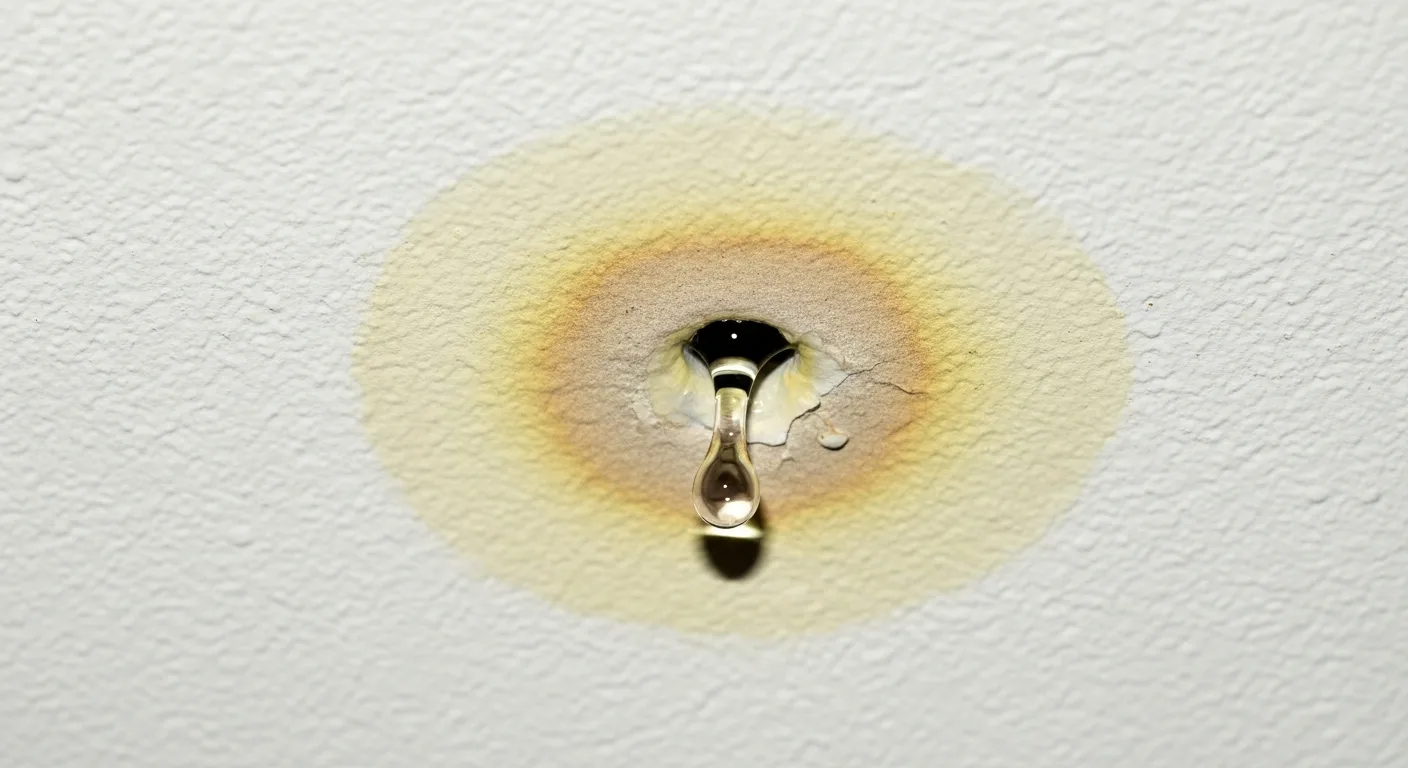
Before assuming the worst, rule out the most common hidden leak of all: the toilet. A worn flapper lets water seep silently from the tank into the bowl, and the fill valve quietly tops it back up — no sound, no puddle, just a meter that keeps moving and a bill that climbs. It can waste hundreds of litres a day on its own.
The check takes two minutes: add a few drops of food colouring to the tank, wait 15 minutes without flushing, and see if colour appears in the bowl. If it does, the flapper is leaking. We cover the full fix in our running toilet guide and the broader picture in why a toilet leaks. It's always worth ruling out the toilet before opening any walls.
How professional leak detection works
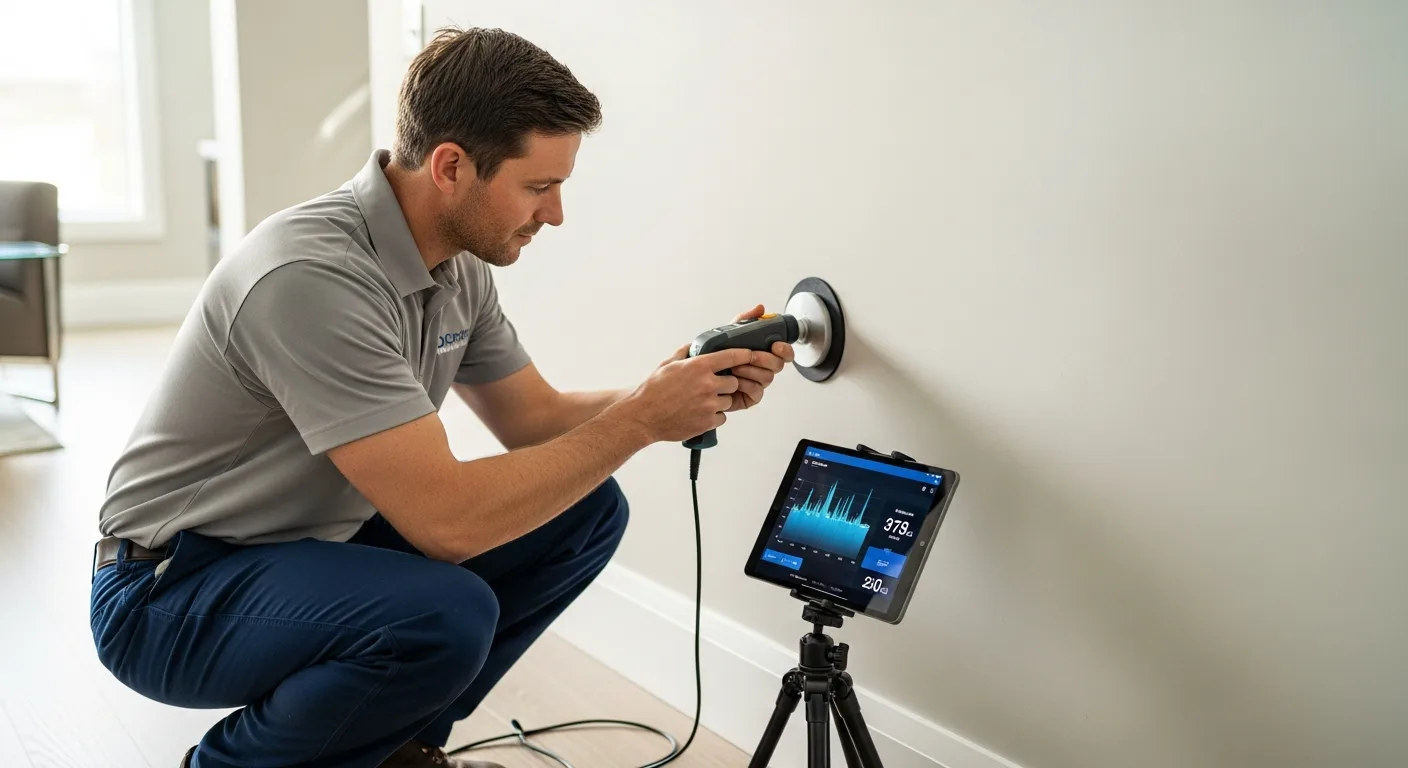
When a leak is confirmed but hidden inside a wall, floor, or slab, the goal is to find its exact location without tearing the house apart. Modern leak detection is non-destructive: instead of guessing and cutting, a plumber uses specialized equipment to pinpoint the leak to within inches, so the repair opening is small and targeted.
The toolkit includes acoustic listening devices that amplify the sound of water escaping under pressure, thermal imaging cameras that reveal the temperature difference of a hot- or cold-water leak behind a surface, and pressure testing that isolates which line is losing water. For buried or slab lines, tracer gas and line-tracing equipment locate the exact run. The result is a precise repair rather than exploratory demolition — which is exactly what our water leak detection service in Kanata provides.
Non-destructive
Acoustic & thermal — no exploratory demolition
To the inch
Pinpoint accuracy means a small repair opening
1,000s L
Wasted water a hidden leak can save per month
Stops rot
Catching it early prevents structural damage
What to do the moment you suspect a leak
Acting quickly limits both the water waste and the damage. If your meter test confirms a leak, or you've spotted active water, run through these steps — and know where your main shutoff is before you ever need it.
- Locate and, if water is actively flowing or pooling, shut off your main water valve to stop the damage.
- Rule out the toilet with the dye test — it's the most common and easiest to confirm.
- Check the visible, accessible spots: under sinks, behind the toilet, around the water heater, and at appliance supply lines.
- Take photos of any staining or damage for your records and insurance.
- If the leak is hidden in a wall, floor, or slab, call for professional leak detection rather than cutting exploratory holes.
- If water is actively flooding or you can't stop it, treat it as urgent and call our 24/7 emergency line.
What leak detection and repair cost
Professional leak detection is a modest, fixed-scope service, and it almost always saves money overall — both by ending the wasted water on your bill and by replacing exploratory demolition with a single precise repair. The repair cost itself depends entirely on where the leak is and how accessible it turns out to be: an exposed supply line is a quick fix, while a slab or in-wall leak involves opening and restoring a small section of the structure.
The honest math is simple: a hidden leak that's left running costs you every single month in wasted water and compounding damage. Paying once to find and fix it stops both. We always locate the leak precisely before quoting the repair, so you know exactly what's involved.
$200–$450
Professional leak detection
$150–$400
Accessible supply line / valve repair
$500–$1,500+
In-wall or slab leak repair
$10–$30
Toilet flapper (if that's the culprit)
Related services
Sources & further reading
Need a Kanata plumber?
24/7 dispatch · flat-rate pricing · local crews