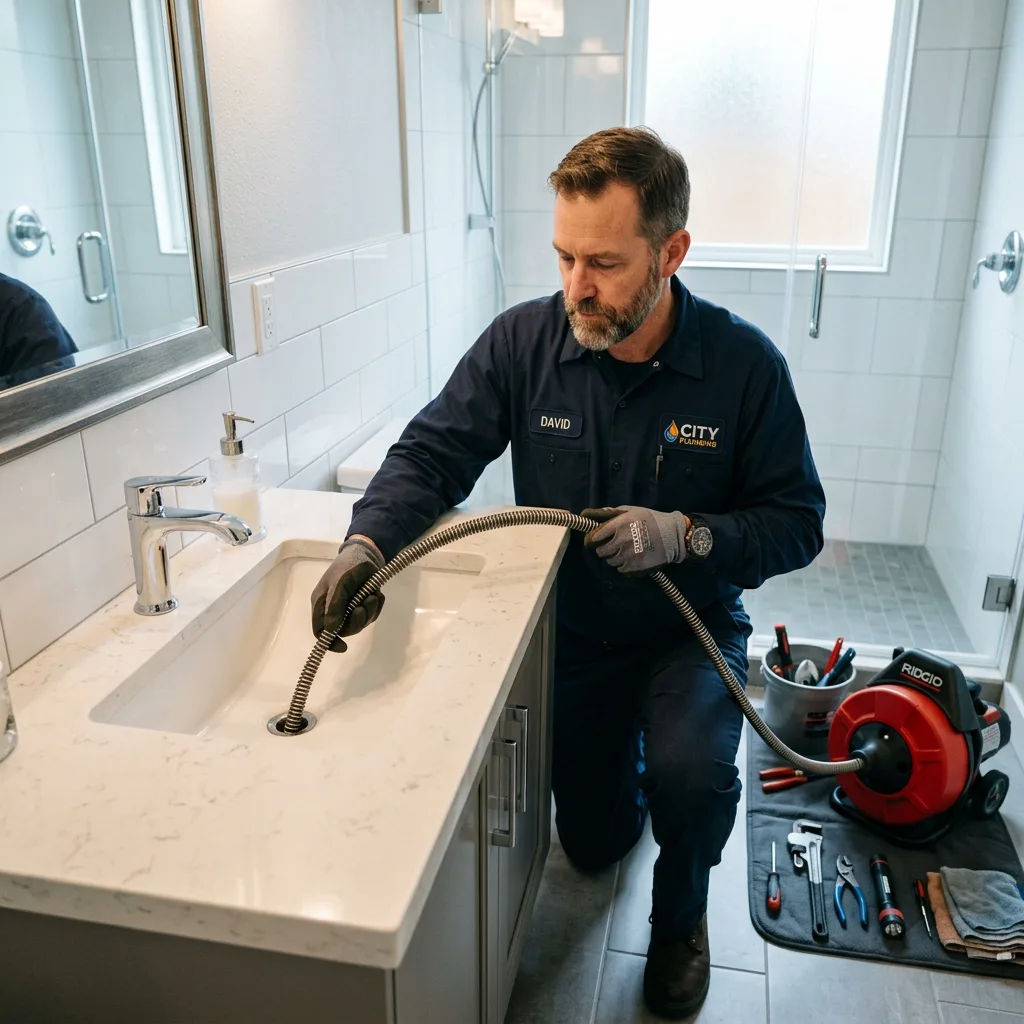
Quick takeaways
- Drains warn you before they back up — slow drainage, gurgling, and odours are the early alarm system.
- One slow fixture is a local clog; several slow fixtures at once point to the main line.
- Gurgling is trapped air escaping past a partial blockage — one of the clearest early signs.
- Recurring clogs mean the cause was never removed; each 'fix' is just poking a hole in the buildup.
- In older Kanata neighbourhoods, tree roots in clay sewer laterals are the most common cause of serious backups.
Why drains fail slowly, then all at once
A drain backup looks sudden, but it almost never is. Inside your pipes, buildup accumulates in layers — grease and soap on the walls, hair matting at joints, scale narrowing the bore, roots creeping in at seams. Water keeps finding a path through the shrinking channel until one day it doesn't, and whatever you flush comes back up instead.
The good news is that a narrowing drain is noisy about it. Every one of the seven signs below is your plumbing reporting reduced capacity, weeks or months before the failure. Caught early, the fix is a straightforward professional drain cleaning. Ignored, it becomes a sewage backup — and in a finished Kanata basement, that's a remediation bill, not a plumbing bill.
Sign 1: Water drains slower than it used to
The earliest and most common sign. A sink that used to empty instantly now holds a pool for a few seconds; the shower puddles around your ankles; the tub takes minutes to clear. Slow drainage means the pipe's usable diameter is shrinking — hair and soap scum in bathrooms, grease and food residue in kitchens.
Watch the pattern. One slow fixture is a local clog, often DIY-clearable with a plunger or hand auger — our slow drain guide covers what's safe to try. But if the slowness keeps returning after you clear it, the real blockage is deeper than your tools reach.
Sign 2: Gurgling sounds from drains or the toilet
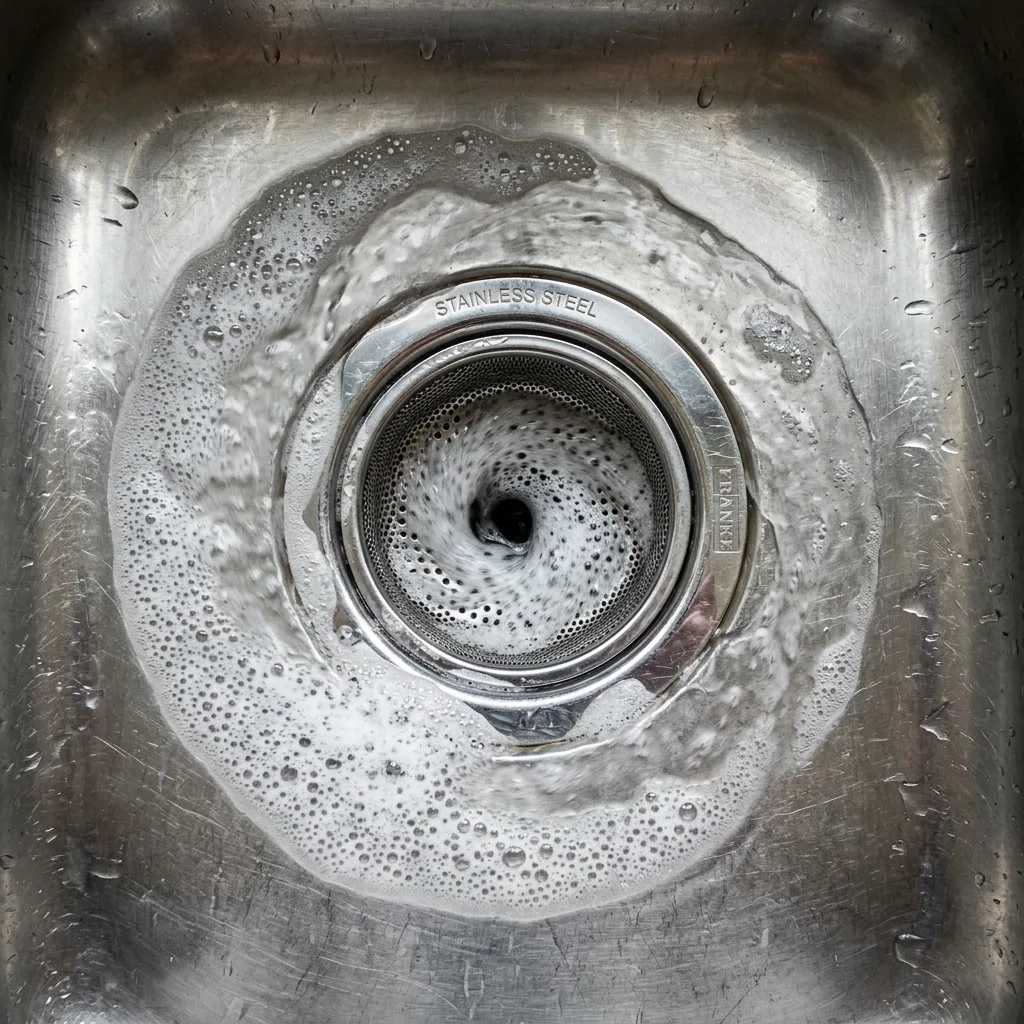
Gurgling is one of the clearest early warnings, and most homeowners ignore it. That bubbling, glugging sound is air trapped by a partial blockage being forced through the water in the pipe or a fixture's trap. A healthy, clear drain with proper venting is quiet.
Pay special attention to cross-talk: the toilet gurgles when the washing machine drains, or the tub bubbles when you flush. Water from one fixture pushing air out of another means the blockage — or a blocked vent — sits in the shared line downstream of both. That's a main-line symptom, and it deserves attention promptly.
Sign 3: Smells you can't clean away
A persistent sewage or rotten-egg smell around a drain means decomposing organic buildup coating the pipe walls, a blockage holding waste in the line, or a trap problem letting sewer gas into the house. If scrubbing the visible drain doesn't fix the smell within a day, the source is deeper than you can reach.
One quick check first: a floor drain or rarely used tub in the basement can simply have a dried-out trap — pour a litre of water down it and see if the smell stops. If odours persist or come from multiple drains, that points back to the main line. Our smelly drain guide walks through the full diagnosis.
Sign 4: Clogs that keep coming back
Plunging the same drain every few weeks isn't maintenance — it's a symptom. A recurring clog means the underlying buildup was never removed; each plunge or chemical treatment just pokes a temporary channel through it, and the pipe re-seals itself within weeks.
This is also where chemical drain cleaners do their damage. Repeated doses corrode metal pipes and older joints, soften rubber seals, and sit in the line as a hazard for whoever eventually opens it — all without removing the blockage that keeps re-forming. If a drain has clogged three times, the third call should be for a proper cleaning, not a third bottle.
3+
Clogs in the same drain = the cause was never removed
Weeks
How fast a poked-through clog re-seals
$0
What chemical cleaner does to the real blockage
Once
A proper cleaning removes the buildup, not just a channel
Sign 5: Several fixtures acting up at the same time
This is the sign that separates a nuisance from an urgent problem. When the kitchen sink, a bathroom, and the laundry drain all slow down together, the blockage isn't in any of them — it's in the main line they share. Everything upstream of a main-line blockage backs up together.
The most telling version: the lowest drains react when higher ones are used. Water appears around the basement floor drain after a shower upstairs, or the basement toilet burps when the washing machine empties. Wastewater that can't get past the main line exits at the lowest opening in the house — which is exactly how basement sewage backups happen. At this stage, stop running water and get the main line inspected and cleaned.
Sign 6: Water appearing where it shouldn't
Wastewater showing up in the wrong fixture — the tub filling when the toilet flushes, the sink backing up when the dishwasher runs — means the normal path is blocked and the water is taking the only exit it can find. This is the last warning before a full backup, and it should be treated as urgent.
The same goes for water pooling around the basement floor drain, damp patches on the lawn along the sewer line's path, or an area of grass that's suspiciously lush in a dry summer — the latter often means the buried lateral is leaking sewage into the soil, feeding the grass above it. In flood-prone pockets of Kanata, pairing a clean main line with backflow protection matters; our sump pump vs. backwater valve guide explains the difference.
Sign 7: Tree roots on the property line (the Kanata classic)
In Kanata's older neighbourhoods — Beaverbrook, Glen Cairn, parts of Bridlewood — many homes still drain through clay or early-generation sewer laterals with joints every metre or so. The mature trees that make these streets beautiful send roots straight to those joints, because a sewer pipe is the best-fed water source in the yard.
Roots enter as hair-fine filaments, then thicken into mats that catch everything passing by. The signature pattern: backups that recur seasonally (roots grow most in spring and early summer), especially in the lowest fixtures. A camera inspection tells you exactly what's in the line, and cleaning with a root-cutting head or hydro jetting restores the bore — our guide on snaking vs. hydro jetting compares the two approaches.
| Local clog | Main line problem | |
|---|---|---|
| How many fixtures | One | Several at once |
| Where it shows | The fixture you used | Lowest drains in the house |
| Gurgling | Same fixture only | Cross-talk between fixtures |
| After plunging | Usually stays clear | Returns within weeks |
| Right response | Plunger or hand auger | Camera inspection + professional cleaning |
What professional drain cleaning actually involves
Professional cleaning is about removing the cause, not poking a hole. Depending on what a camera inspection shows, that means a powered auger to cut through blockages and root mats, or hydro jetting — high-pressure water that scours grease, scale, and residue off the full circumference of the pipe wall, restoring the original diameter. The camera then verifies the result, and shows whether the pipe itself has a defect (a sag, offset joint, or crack) that cleaning alone can't fix.
If you're seeing two or more of the seven signs, book a drain and sewer cleaning in Kanata before the season's first backup. For homes and businesses across the wider Ottawa area, Plumbing Now — a trusted Ottawa plumbing company — handles everything from single fixtures to full mainline jetting through their drain cleaning service. And if sewage is already coming up a drain, treat it as an emergency — stop all water use and call the 24/7 emergency line.
- Never pour grease or cooking oil down the kitchen sink — jar it and bin it
- Use hair catchers in every shower and tub drain
- Run hot water for 30 seconds after doing dishes
- Flush only the three Ps — no wipes, even 'flushable' ones
- Pour water into rarely used floor drains monthly to keep traps sealed
- Book a camera inspection if your home is 40+ years old and never had one
Related services
Sources & further reading
Need a Kanata plumber?
24/7 dispatch · flat-rate pricing · local crews