
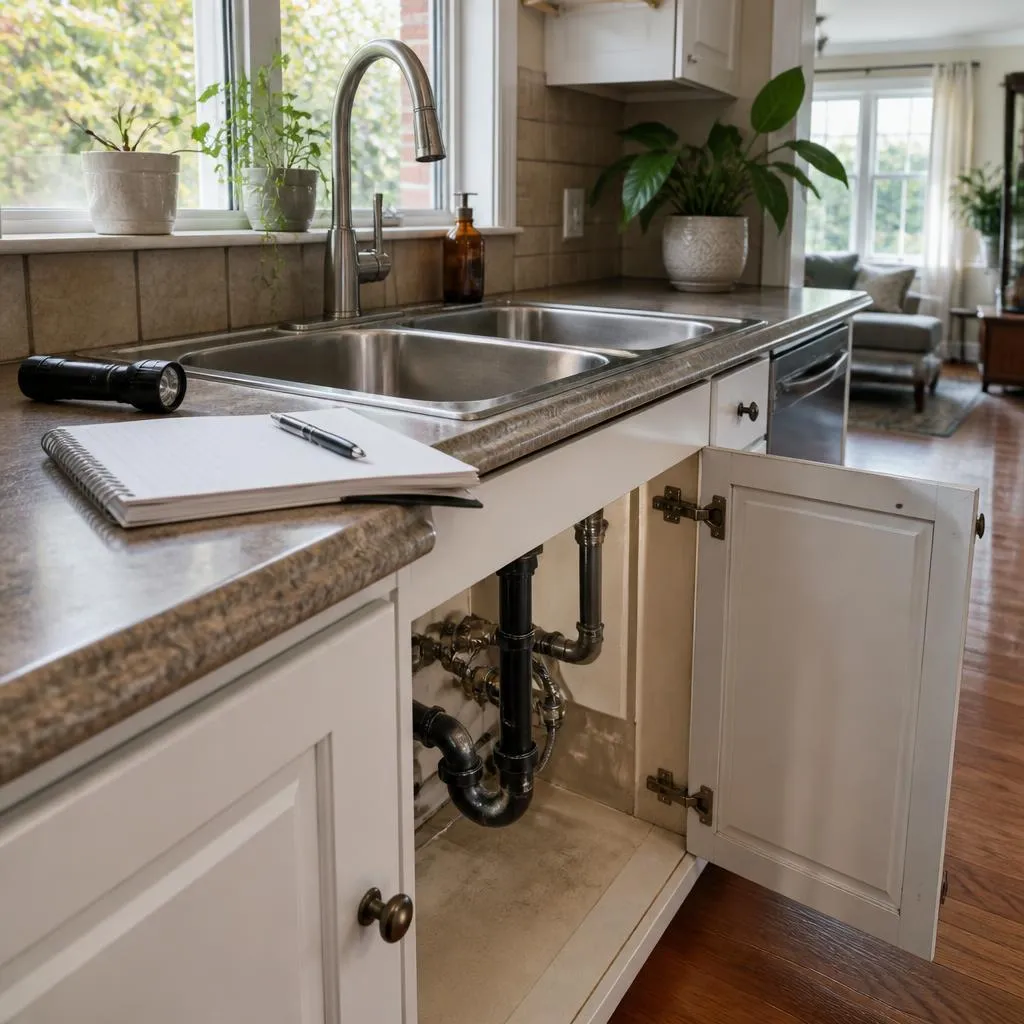
Quick takeaways
- Test accessible taps, toilets, and drains with the seller or agent's permission; note slow drainage, odours, leaks, and pressure changes.
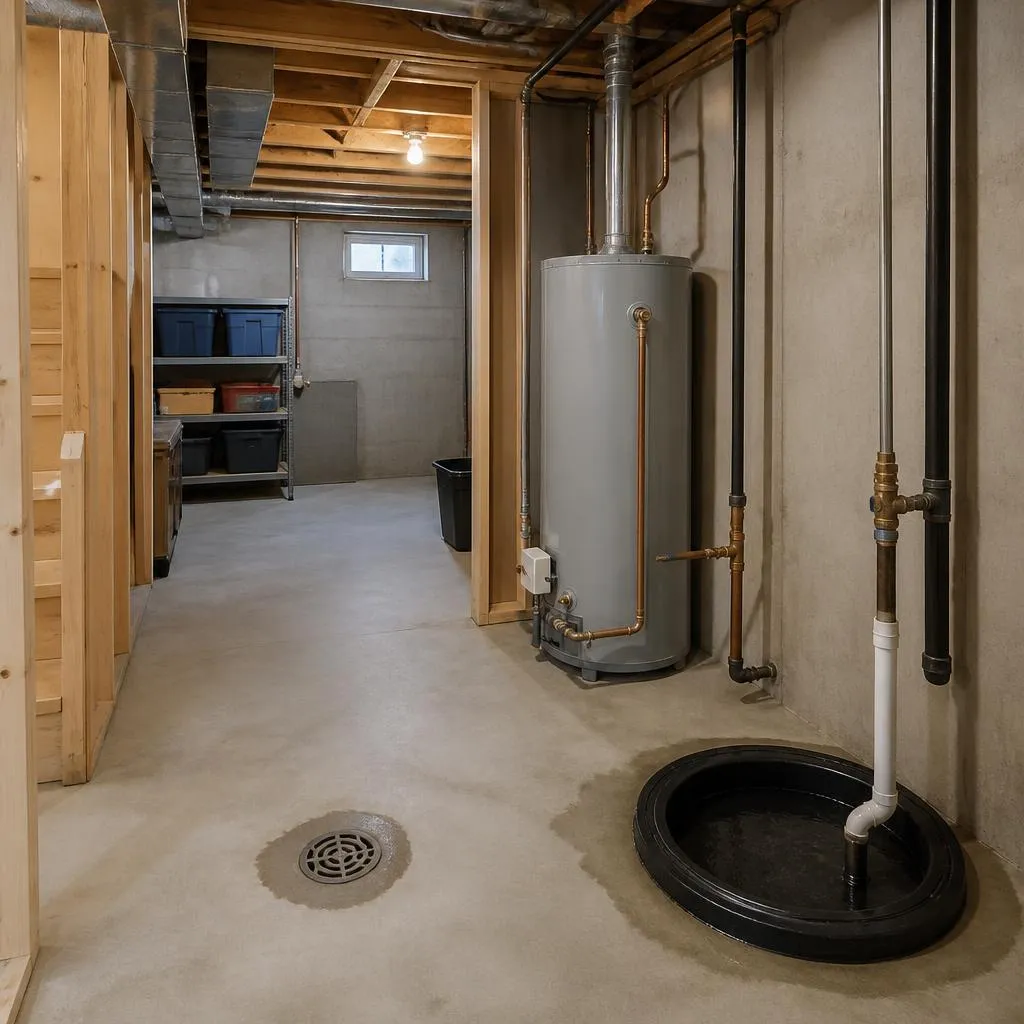
- Inspect visible basement piping, the water heater area, floor drains, and sump-pump setup without moving stored items or opening equipment.
- Ask for permits, invoices, service records, and the location of the main shut-off; verify important claims in writing.
- Winter viewings can reveal cold-weather weaknesses, but one visit cannot prove how a home performs in every season.
What a home plumbing walkthrough can—and cannot—tell you
A buyer's walkthrough is a structured visual check of accessible fixtures and areas. It can help you notice drips, stains, unusual sounds, slow drains, missing shut-off labels, or signs that deserve follow-up. It is not a substitute for a qualified home inspection, a plumbing diagnosis, or a camera inspection of a buried sewer line. Many supply and drain pipes are concealed in walls, ceilings, floors, and landscaping.
Set expectations before the visit: do not force stuck valves, dismantle a trap, remove an access panel, operate equipment you do not understand, or run water where there is an active leak. Ask the seller or agent before testing fixtures. If a concern affects your purchase decision, arrange a suitable inspection within the terms and timelines of your offer, and ask the inspector which systems or areas are outside the agreed scope.
Check taps, sinks, toilets, and visible supply lines
With permission, run each accessible faucet briefly on hot and cold. Observe whether water flows consistently, the fixture drips when shut off, or moisture appears below the sink. Look at visible shut-off valves and flexible connectors without touching them. A brief check does not measure pressure precisely or establish the condition of concealed piping, so record what happened rather than assuming a single cause.
Flush toilets and look for continued running, rocking, visible leakage at the base, or water in the nearby ceiling below. Check accessible vanity cabinets for staining, swollen material, corrosion, or a musty smell. Ask whether repairs were made and request invoices or permits where applicable. Do not treat a fresh coat of paint or a dry surface during one viewing as proof that an earlier leak is resolved.
- Run taps briefly and note drips or inconsistent flow
- Look under sinks for staining, corrosion, or dampness
- Flush toilets and listen for continued running
- Check for visible moisture at fixtures and ceilings below
Assess drains, floor drains, and sewer questions
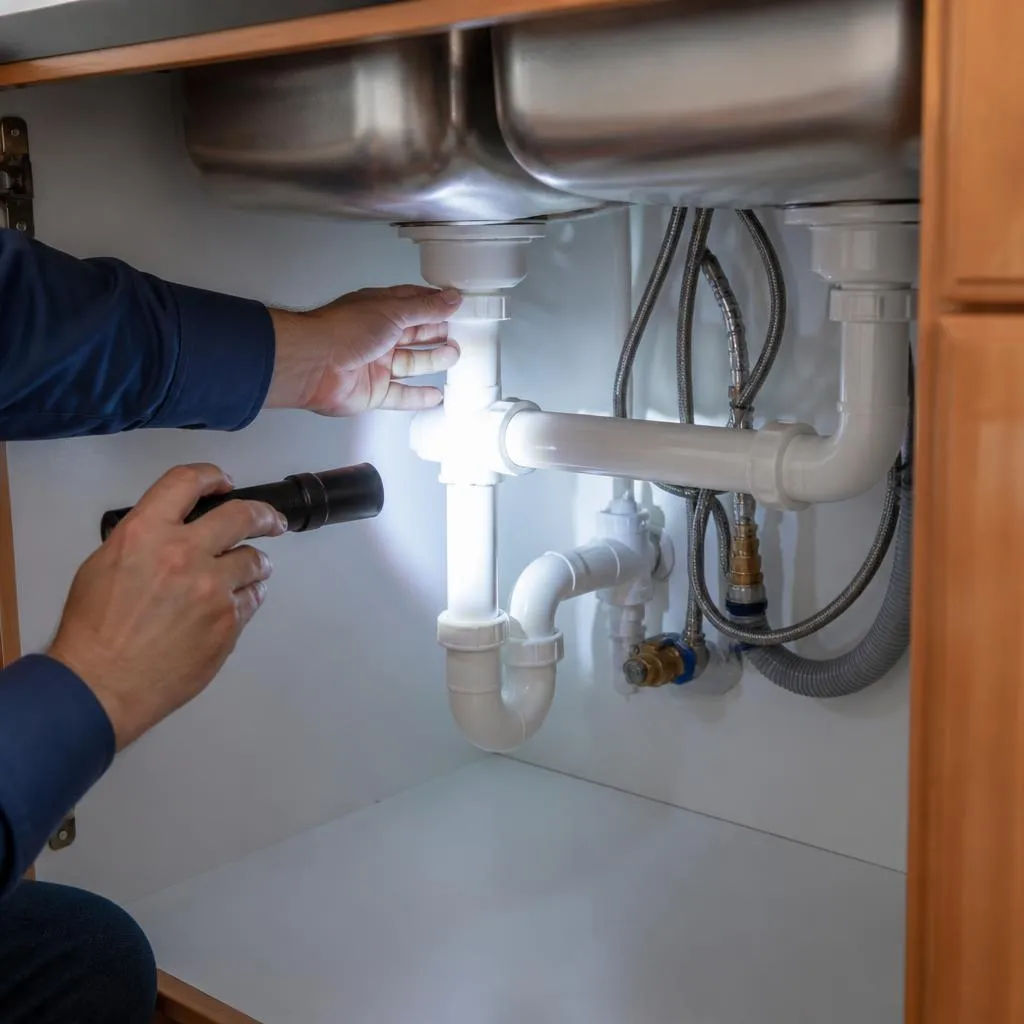
Notice whether a sink, tub, or shower drains unusually slowly, gurgles, or leaves an odour. Avoid filling a tub or running several fixtures at once unless the seller has authorized that test. A slow fixture can have a local cause, while multiple symptoms can merit broader evaluation; neither pattern alone proves a damaged sewer line. Record which fixtures were used and what happened.
Ask whether the private sewer lateral has been inspected, repaired, or replaced, and request a dated report if one exists. A general home inspection may not include a camera inspection of the buried line; confirm scope directly. For a property with a known backup, repeated drain problems, or an older service line, ask whether a separate sewer camera assessment is appropriate. Review the Ottawa sewer-backup guide for questions about backup risk and prevention.
Look at the basement, water heater, and sump-pump area
In the basement, look for water marks, peeling finishes, visible corrosion, damp smells, and signs of previous repairs around accessible pipes. Do not step into standing water or touch electrical equipment in a wet area. Note where the floor drain is and whether stored items prevent access. Ask how the sump pump is tested and whether a backup system or maintenance record is available; do not pour water into the pit or unplug equipment without permission.
For the water heater, record the visible make, model, fuel type, and any service or installation paperwork if it is safe to read. Look for active leaks, rust, unusual discharge, or water damage nearby, but do not adjust gas, electrical, temperature, or pressure-relief controls. Ask who owns the appliance if it may be rented and whether the seller has records. The Ottawa water-heater guide explains the later repair-or-replace decision.
Winter viewings: watch for cold-weather plumbing clues
A winter visit can reveal whether the home is comfortable and whether accessible pipes sit in a cold garage, crawlspace, or exterior-wall cabinet. Look for exposed piping near drafts, frost, water staining, or a fixture that is not operating normally. Do not assume that one cold day proves a pipe will freeze, and do not test a suspected frozen line with a torch or improvised heater.
Ask how outdoor taps are shut off and drained, whether the home has had frozen or burst pipes, and what steps were taken after any incident. Check whether the sump-pump discharge route appears clear and protected from obvious obstruction, but do not modify it during the viewing. Seasonal conditions vary: a summer inspection cannot demonstrate the home's winter performance. Use the Kanata winter plumbing guide and frozen-pipe prevention checklist for follow-up questions.
- 1
Ask about history
Request details and invoices for any freeze, leak, or thaw-related repair.
- 2
Locate vulnerable areas
Note exposed pipes, unheated spaces, outdoor taps, and basement fixtures.
- 3
Confirm prevention
Ask how the home is heated and how outdoor plumbing is drained.
- 4
Arrange follow-up
Have a qualified professional assess unresolved concerns before deadlines.
Ask about service-line ownership, permits, and repair records
Ottawa's service-line guidance explains that responsibility is shared between the City and property owners, with the public and private portions meeting at the property line. Ask whether water or sewer work has occurred, where the repair was made, and whether the seller has a sketch, invoice, inspection video, or City correspondence. The exact location matters if a future repair is needed.
For renovations, request permit records and final inspection information when available. The City describes plumbing-related inspection stages as part of its building permit approval process. A permit record does not replace a current condition assessment, and an absent document does not by itself establish what work was done; treat documentation as a question to verify with the appropriate authority or professional.
Turn observations into a clear follow-up plan
Sort notes into three groups: visible conditions that appear to work, concerns to ask the seller about, and issues that need a qualified professional's opinion. Keep the wording factual: “water mark under the kitchen sink” is more useful than “the supply line is failing.” Attach photos only where permitted, and write down the date, fixture, and conditions when you observed the issue.
If you need a focused plumbing assessment before closing, agree on the scope in advance: fixtures, visible piping, water heater, sump equipment, or sewer camera inspection are not automatically the same service. Ask what is included, what is excluded, whether the work is invasive, and what written findings you will receive. For another Ottawa option, compare a pre-purchase plumbing inspection by its documented scope and report—not by a headline promise.
Questions worth asking before you make a decision
Ask the seller or agent about known leaks, backups, frozen pipes, water-heater servicing, sump-pump failures, plumbing renovations, and insurance claims involving water. Request supporting records when available. Ask the inspector whether the review includes visible plumbing only, whether sewer lines are excluded, and whether specialist testing is recommended. Clarify your offer deadlines before booking additional assessments.
If the walkthrough reveals a recurring slow drain or backup, compare the symptoms with this Ottawa drain repair guide before deciding whether to request a cleaning, camera inspection, or repair quote.
If a repair is recommended, get a written description of the issue, location, proposed work, testing, permits or inspections where applicable, and restoration responsibilities. Compare the evidence and scope rather than choosing solely by a verbal estimate. The guide to choosing a Kanata plumber lists practical questions for service providers. For local context, connect the inspection with the home's neighbourhood—such as Glen Cairn—without treating age or location as proof of a defect.
Sources & further reading
Need a Kanata plumber?
24/7 dispatch · flat-rate pricing · local crews