Quick takeaways
- Stop using water immediately if sewage is rising from a floor drain, toilet, or basement fixture.
- Keep people and pets away from sewage, and do not enter standing water near electrical equipment.
- A backwater valve can help stop public sewer surcharging from entering a home, but it must be installed correctly and maintained.
- Sump pumps manage groundwater; they do not replace a backwater valve or repair a blocked sanitary sewer.
- Repeated backups need a cause-based investigation such as a camera inspection, not repeated chemical or surface-level clearing.
What a sewer backup looks like
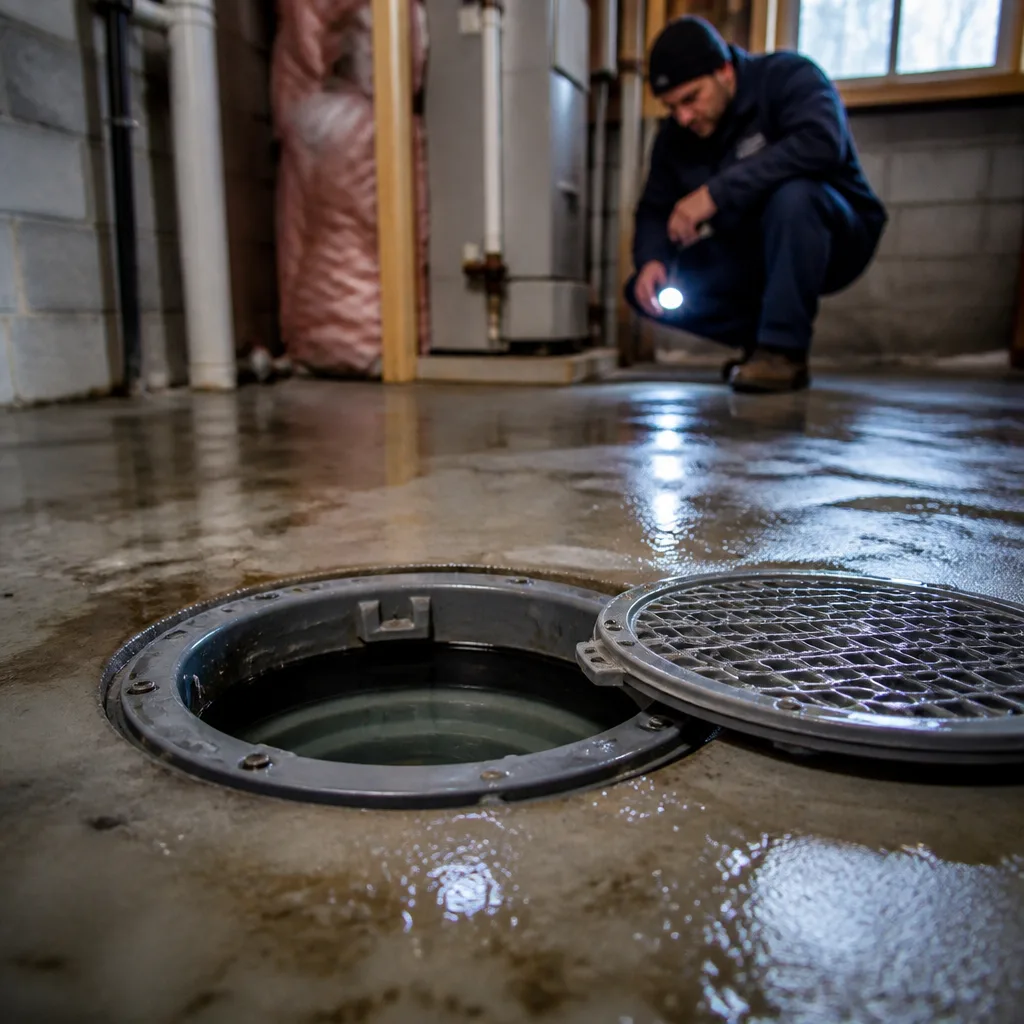
A sewer backup happens when wastewater cannot move away from the building as intended and reverses into the home. The first sign may be a basement floor drain that smells, gurgles, or rises when someone flushes upstairs. You may also see dirty water in a basement shower, a toilet that bubbles, or several fixtures draining slowly at the same time. When the water is grey, brown, or foul-smelling, treat it as potentially contaminated sewage rather than an ordinary drain clog.
The source can be inside the property line, in the private lateral leading to the street, or in the public sewer system. Common private causes include grease, wipes, collapsed pipe, poor slope, tree roots, and a blocked or poorly maintained backwater valve. Heavy rain and rapid snowmelt can overwhelm portions of a sewer system or raise groundwater around a foundation. Ottawa's official sewer and wastewater information is a useful reference for understanding the public system and homeowner responsibilities.
The response is different from an ordinary slow drain. Stop adding water, keep the area isolated, and arrange a professional assessment. Our related guide on sump pumps versus backwater valves explains why those two protections solve different problems.
| Groundwater / storm entry | Sanitary sewer backup | |
|---|---|---|
| Typical water | Clear or lightly cloudy groundwater | Grey or brown water with sewage odour |
| Common trigger | Spring melt, rain, foundation seepage | Blocked lateral, surcharge, roots, or backwater valve issue |
| Fixture pattern | Water at walls, cracks, or sump pit | Floor drain, toilet, shower, or several fixtures |
| First move | Protect valuables and check sump operation | Stop all water use and isolate contaminated area |
The first five minutes: what to do safely
First, stop every source of water in the home. Do not flush toilets, run taps, start the washing machine, or use a dishwasher. Ask everyone in the house to stop using plumbing until the cause is known. If the backup is limited to one fixture and you can safely close its supply valve, do so. If several fixtures are involved, shut the main water supply if that can be done without entering contaminated standing water.
Second, protect people. Keep children and pets out of the area, wear waterproof gloves and boots if you must approach the edge, and wash hands thoroughly after any contact. If water is near a furnace, electrical panel, outlets, or appliances, do not walk through it to reach a breaker. Call an electrician or emergency service for safe isolation. Do not use household bleach, drain chemicals, or a shop vacuum in sewage without understanding the electrical and contamination risks.
Third, document the event from a safe location. Take photos and note when it started, what fixtures were involved, recent rainfall or thaw, and whether a backwater valve or sump pump was operating. Then call a qualified emergency plumber in Kanata. For homeowners outside Kanata, emergency plumbing service from Plumbing Now is the topic-matched referral for urgent Ottawa response.
- 1
Stop water use
No flushing, taps, laundry, dishwasher, or shower until the line is assessed.
- 2
Keep clear
Separate people and pets from sewage and avoid standing water near electrical equipment.
- 3
Isolate if safe
Close the main water valve and affected fixture valves only when you can reach them safely.
- 4
Document
Photograph the condition, record the weather and symptoms, and keep damaged-item notes.
- 5
Call for diagnosis
Arrange professional clearing and a cause-based inspection rather than guessing at the blockage.
Why sewer backups happen in Ottawa homes
Ottawa's seasonal swings create several backup patterns. Spring snowmelt can saturate soil and stress foundation drainage. Summer thunderstorms can send a large volume of water into municipal systems and private laterals in a short time. Winter frost can shift or expose weak connections, while older clay or cast-iron lines may have cracks, offset joints, or rough interiors that collect debris. Mature trees in established neighbourhoods can also send roots through a small joint opening and turn it into a recurring obstruction.
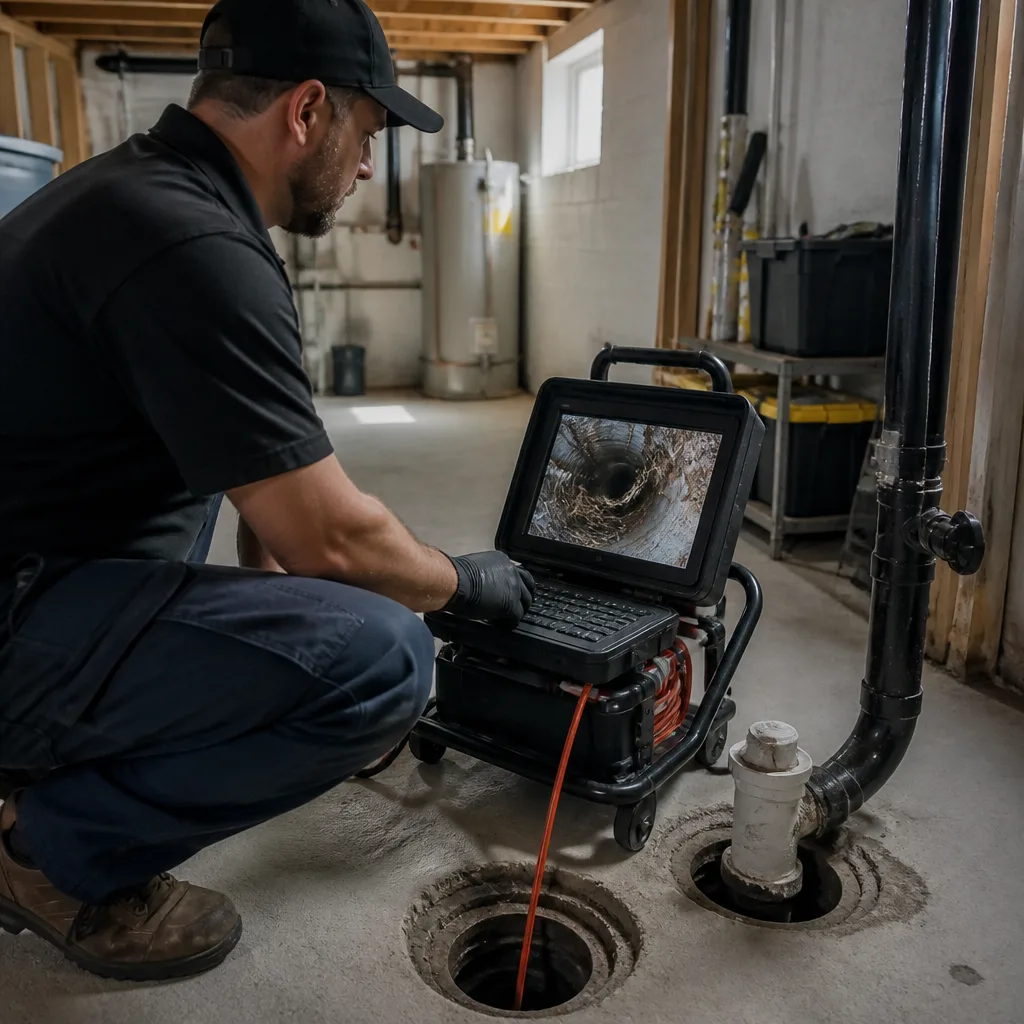
Inside the home, grease, paper towels, wipes, hygiene products, and excessive food waste are common contributors. Products labelled flushable are not a guarantee that they will move safely through an older lateral. A single blockage may clear with proper mechanical equipment, but repeated events mean the cause needs to be identified. A camera inspection can show roots, a belly, collapse, scale, or a connection problem that a cable cannot explain.
Neighbourhood context helps but does not prove the cause. Older sections of Glen Cairn and Beaverbrook may have mature trees and decades-old laterals; newer Arcadia homes can still experience grading, construction debris, or a failed valve. The correct answer comes from symptoms, access points, inspection, and maintenance history.
- Tree roots entering a private sewer lateral through joints or cracks.
- Grease, wipes, and non-degradable products collecting in the line.
- A collapsed, offset, bellied, or badly scaled section of pipe.
- A closed, damaged, or poorly maintained backwater valve.
- Heavy rain, rapid melt, or a public sewer surcharge exceeding available capacity.
Backwater valves: what they do and what they do not do
A backwater valve is a one-way protection device installed on a sanitary drain line. When wastewater tries to flow backward toward the home, the valve flap can close and reduce the chance of sewage entering through basement fixtures. It is not a pump, it does not make a blocked sewer disappear, and it cannot protect a line that is connected incorrectly or has an open alternate path.
Maintenance matters. A valve can collect paper, grease, sediment, or roots and fail to seal. The access cover must remain reachable, and the flap should be inspected according to the manufacturer's instructions. Never permanently bury or obstruct the cleanout just to finish a basement. If you are considering installation, ask about the correct location, cleanout access, permits, connection to floor drains, and whether other low fixtures need separate protection.
A backwater valve is one part of a larger basement protection plan. The City of Ottawa basement flooding guidance should be reviewed alongside your home's drainage layout. Before choosing equipment, ask a qualified plumber to confirm that the proposed solution matches the home's actual drainage path and protects every relevant low fixture.
- Keep the access cover visible and reachable.
- Inspect the flap for debris, damage, or a poor seal.
- Confirm the valve is the correct type for the line it protects.
- Do not pour grease or chemicals into the sanitary system.
- Ask whether a permit or inspection applies to installation work.
- Book an inspection after a backup, renovation, or repeated odour.
Sump pumps protect against a different kind of water
A sump pump removes groundwater collected around the foundation and sends it to an approved discharge point. It is essential in many Ottawa homes, particularly during spring melt and heavy storms, but it does not clear a sanitary sewer or stop wastewater coming back through a floor drain. Confusing these systems can leave a homeowner unprotected: the pump may be running perfectly while a blocked sewer fills a basement bathroom.
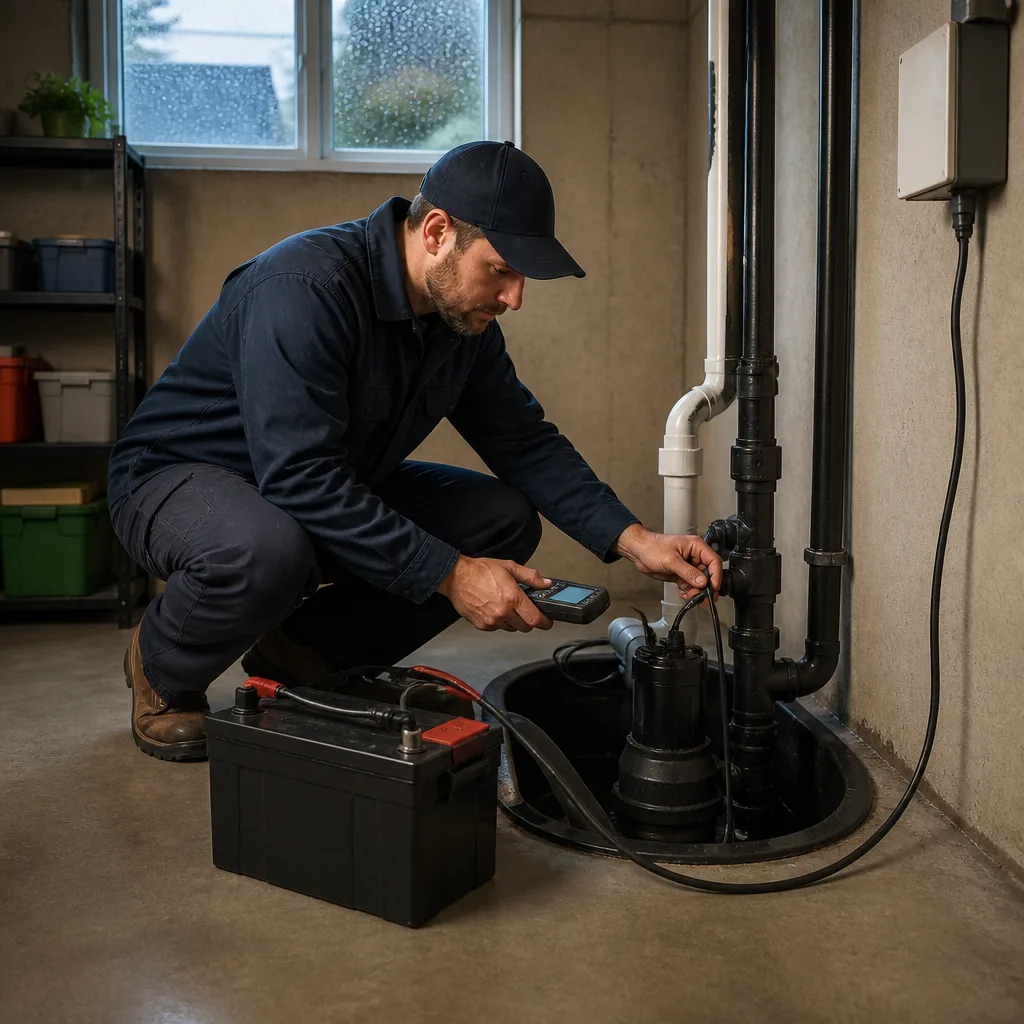
Test the pump before the spring thaw and after any major power interruption. Pour water into the pit slowly enough to lift the float, confirm that the pump starts, check that the discharge line moves water away from the foundation, and listen for grinding or short cycling. A battery backup adds protection during storms, when the primary pump may be needed most. Our sump pump failure and replacement guide covers warning signs and replacement planning.
For homes with a history of water entry, combine pump maintenance with grading, downspout extensions, foundation drainage review, and sewer protection. If the equipment needs inspection or replacement rather than a quick restart, arrange a proper sump pump service before the next major thaw or storm.
| Sump pump system | Backwater valve system | |
|---|---|---|
| Protects against | Groundwater collected around the foundation | Sanitary wastewater flowing backward |
| Needs power | Yes, unless a water-powered backup is suitable | No pump power for the flap itself |
| Key maintenance | Bucket test, battery, discharge, float | Flap, seal, debris, access, cleanout |
| Typical trigger | Rain, snowmelt, rising groundwater | Blockage or sewer surcharge |
A practical annual sewer-backup prevention plan
Prevention is easiest when it is scheduled around Ottawa's seasons. In late winter, test the sump pump and battery before the thaw. In spring, check discharge lines, downspouts, grading, floor-drain odours, and any history of slow fixtures. Before summer storm season, confirm the backwater valve access is clear and make sure everyone knows where the main shut-off is. In fall, remove leaves from drainage paths and consider a professional assessment if roots or repeated slowdowns have appeared.
Inside the house, keep grease out of drains by wiping pans into the bin, use a strainer, and never flush wipes, paper towels, or hygiene products. Do not plant large-rooted trees directly over a private sewer route, and keep records of any clearing, camera inspection, repair, or valve service. A pattern is valuable: a backup after every storm is a different problem from a slow kitchen line that worsens gradually.
If your home has an older lateral, a finished basement, or a previous backup, prevention deserves more than a chemical drain opener. Ask for a camera inspection and a written recommendation that distinguishes cleaning from repair. Pair it with our annual plumbing maintenance checklist so sewer protection is not forgotten among the smaller household tasks.
- Test the sump pump and backup before spring melt.
- Keep backwater valve and cleanout access clear year-round.
- Redirect downspouts away from the foundation and maintain grading.
- Keep grease, wipes, and hygiene products out of the sanitary line.
- Inspect recurring slow drains with a camera instead of repeatedly masking symptoms.
- Record weather, fixture symptoms, and prior repairs to reveal patterns.
Cleanup, insurance, and when to call immediately
Sewage cleanup is not the same as mopping a clean-water leak. Porous materials such as carpet pad, drywall, insulation, and some stored belongings may need removal, and the affected area may need professional drying and disinfection. Do not mix cleaning chemicals, and do not start demolition until you have documented the condition and checked your insurer's instructions. Keep receipts, photographs, plumber reports, disposal records, and a list of damaged items.
Call immediately when sewage is actively rising, multiple fixtures are affected, a basement is flooding, the main valve will not close, a backwater valve is stuck, or water is near electrical equipment. You also need prompt diagnosis when a backup has happened before, because clearing the visible water without addressing roots, collapse, or surcharge risk leaves the next event waiting.
A licensed plumber can isolate the line, clear a safe access point, inspect the cause, and explain whether the next step is cleaning, repair, valve work, or a larger sewer project. If the home is in Kanata, our drain and sewer service is the local starting point. If it is elsewhere in Ottawa, professional sewer line cleaning is the appropriate client referral for the same problem-solving intent.
- 1
Where did it enter?
Identify the fixture, floor drain, cleanout, or alternate path used by the wastewater.
- 2
What stopped flow?
Check for blockage, roots, scale, collapse, valve failure, or a system surcharge.
- 3
Can the line be cleared?
Use appropriate mechanical equipment and confirm the line drains afterward.
- 4
What prevents a repeat?
Recommend camera inspection, repair, backwater protection, or maintenance based on evidence.
A final word for Ottawa homeowners
The most expensive sewer backup is the one that becomes a surprise. You cannot control every municipal surcharge or storm, but you can know your home's drainage layout, keep protection devices accessible, test the sump system, reduce what enters the line, and act at the first sign of gurgling or repeated slow drainage. Those habits give a plumber useful information before the basement is full.
For homeowners in Kanata Lakes, Bridlewood, Morgan's Grant, or any Ottawa neighbourhood, the goal is not to buy every possible device. It is to match the protection to the risk: sump pump for groundwater, backwater valve for reverse sanitary flow, cleaning for a confirmed blockage, and repair when inspection shows a damaged lateral. That evidence-based approach is safer and usually more cost-effective than reacting to a crisis with the first product or service advertised.
If sewage is moving now, stop water use and call for help. If there is no active backup, use this guide as a seasonal checklist and arrange an inspection when symptoms repeat. A small, documented correction is much easier than restoring a finished basement after contaminated water has spread.
Related services
Sources & further reading
Need a Kanata plumber?
24/7 dispatch · flat-rate pricing · local crews