Quick takeaways
- Kanata's climate, hard water, and housing stock create a predictable set of plumbing problems — frozen pipes, mineral scale, spring flooding, and aging materials top the list.
- Frozen and burst pipes are the most expensive winter emergency, and almost every one we see was preventable.
- Ottawa's hard water quietly shortens the life of water heaters, faucets, and appliances across the city.
- Homes from the 1980s–90s in older Kanata neighbourhoods may still have Poly-B piping, which fails without warning.
- A yearly habit of small checks — shut-off valve, sump pump, water heater, exposed pipes — prevents most of the calls on this list.
Why Kanata homes have their own plumbing personality
Plumbing problems aren't random — they follow the climate, the water, and the age of the housing stock. Kanata has a distinctive combination of all three: winters that regularly hit -30°C, some of the hardest municipal water in Ontario, spring snowmelt that saturates the ground for weeks, and neighbourhoods built in waves from the 1970s through today, each with the materials of its era.
That means a plumber working in Beaverbrook or Glen Cairn sees different problems than one in a new Arcadia build — original copper and galvanized lines and decades-old shut-off valves in the former, builder-grade fixtures and settling-related issues in the latter. Knowing which problems your home's age and neighbourhood make likely is half the battle. The rest of this guide covers the eight problems we're called for most, roughly in order of how expensive they get when ignored.
1. Frozen and burst pipes — the winter emergency
Nothing else on this list floods a finished basement in twenty minutes. When water freezes inside a pipe it expands roughly 9%, and the pressure it creates will split copper, crack fittings, and burst plastic. The worst part is the timing: the pipe splits while frozen, but the flood starts when it thaws — often when nobody's home.
The homes most at risk are those with supply lines on exterior walls, unheated garages with plumbing overhead, and homes left cool during winter vacations. Prevention is genuinely simple: disconnect hoses and drain outdoor faucets every October, keep the house above 15°C even when away, open cabinet doors on brutal nights, and let a vulnerable tap drip during a deep freeze. We cover the full playbook in our frozen pipes prevention guide, and if you're ever staring at a split pipe, our burst pipe guide walks you through the first five minutes.
-30°C
Typical Kanata cold-snap lows every winter
9%
How much water expands when it freezes
20 min
How fast a burst line can flood a basement
October
When prevention needs to happen — not January
2. Hard water and mineral scale — the slow, silent one
Ottawa's municipal water is hard — loaded with dissolved calcium and magnesium picked up from the limestone bedrock the supply passes through. You see the evidence everywhere: white crust on faucets and shower heads, cloudy spots on glassware, soap that won't lather properly, and kettles that scale up in weeks.
The real cost is what you don't see. Scale accumulates inside your water heater, forcing it to work harder, run louder, and die years earlier than it should. It clogs aerators, seizes shut-off valves, and shortens the life of dishwashers and washing machines. If your shower heads crust over within months of cleaning them, it's worth reading our Kanata water hardness guide and considering whether a softener makes sense for your home — our water treatment services page covers the options.
3. Clogged and slow drains
Slow drains are the most common call of all, and the causes are wonderfully predictable: hair and soap scum in bathroom drains, grease and food waste in kitchen lines, and — in older neighbourhoods with mature trees — roots working their way into clay sewer laterals.
The mistake most homeowners make is reaching for chemical drain cleaner. It rarely clears the real blockage, it damages pipes with repeated use, and it makes the eventual professional visit more hazardous. A drain that keeps slowing down after you clear it, or multiple slow drains at once, points to a deeper problem in the main line that needs a professional drain and sewer service. Our guide on slow drain causes and fixes covers what's safe to try yourself.
4. Sump pump failures and spring flooding
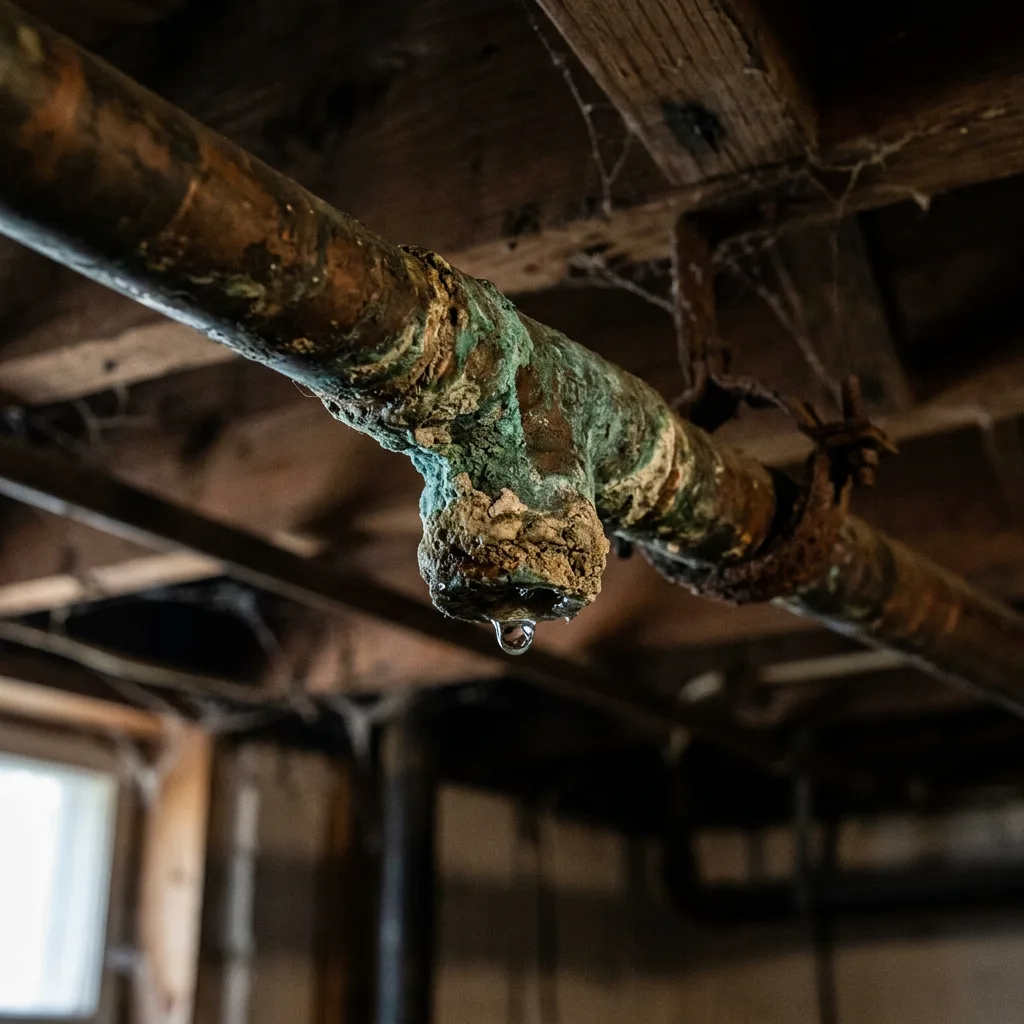
Every spring, snowmelt and rain saturate the ground across Kanata, and thousands of sump pumps run for weeks straight. The pumps that fail are almost always the ones nobody tested since the previous year. A failed pump during the March melt means a flooded basement — and by then, every plumber in Ottawa is booked solid with the same emergency.
Homes in low-lying pockets and newer subdivisions with high water tables — parts of Morgan's Grant and Kanata Lakes among them — depend on their pumps the most. Test yours every fall and every early spring by pouring a bucket of water into the pit, add a battery backup if you don't have one (power outages and heavy storms arrive together), and replace any pump close to the ten-year mark. Our sump pump failure guide covers the warning signs in detail.
6. Low water pressure
Weak pressure at every fixture usually traces to one of a few culprits: a partially closed main valve, a failing pressure-reducing valve, scale-clogged aerators (hard water again), corroded galvanized supply lines in the oldest homes, or a hidden leak bleeding pressure from the system.
Pressure that fades at one fixture is usually a clogged aerator or a bad cartridge — a cheap fix. Pressure that's dropped house-wide, or dropped suddenly, deserves diagnosis, because two of its causes (leaks and failing valves) get worse on their own. Our low water pressure guide walks through isolating the cause before you call.
7. Water heater problems
Between hard water scale and the simple workload of heating near-freezing inlet water for half the year, water heaters in Ottawa work harder than almost anywhere. The common symptoms: not enough hot water, rumbling or popping sounds (sediment being tossed inside the tank), rusty hot water, and moisture or pooling at the base.
A tank heater that's past ten years and showing any of these is telling you something. Repair-or-replace is a genuine decision — our repair vs. replace guide lays out the math, and the water heaters hub covers tank and tankless options. One non-negotiable: water pooling under the tank means the tank itself is failing, and it will not heal. Plan the replacement before it becomes a flood.
8. Aging pipes and Poly-B — the ticking clock
Kanata expanded fast through the 1980s and 90s, and a slice of that housing stock was plumbed with polybutylene ('Poly-B') piping — a grey plastic pipe that seemed excellent until it started failing en masse. Poly-B degrades from the inside out, so it looks fine right up until a fitting lets go. Insurers increasingly surcharge or decline homes that still have it.
If your home was built between roughly 1978 and 1995 and you've never checked, look for grey plastic pipe near the water heater or in the utility room, and read our Poly-B replacement guide. Older copper systems have their own aging pattern — pinhole leaks — and our copper vs. PEX repiping guide covers the options when it's time. Full house re-piping sounds drastic, but it's a one-time fix for a problem that otherwise recurs indefinitely.
| Home era | Watch for | |
|---|---|---|
| 1970s–80s (Beaverbrook, Glen Cairn) | Original copper, galvanized lines | Pinhole leaks, seized valves, clay sewer laterals with root intrusion |
| 1980s–90s (Bridlewood, Katimavik) | Poly-B era | Poly-B piping, first-generation sump pumps, aging water heaters |
| 2000s (Morgan's Grant, Kanata Lakes) | Builder-grade fixtures | Failing cartridges and fill valves, water heaters hitting end of life |
| 2010s+ (Arcadia, Richcraft Trails) | Modern PEX | Settling-related drips, sump pump reliance, hard-water scale on fixtures |
The prevention habit that avoids most of this list
Almost every emergency above has a cheap, boring prevention step. The homeowners who never call us in a panic are the ones with a simple seasonal routine — ten minutes in the fall, ten in the spring. If you want the complete version, our annual plumbing maintenance checklist turns this into a schedule you can actually follow.
And when a problem is beyond DIY — a burst line, a sewer backup, no water — that's what a 24/7 emergency plumber in Kanata is for. For bigger jobs across the wider region, the licensed plumbing experts at Plumbing Now serve all of Ottawa and are the team we point readers to for full-service repair work.
- Fall: disconnect hoses, drain outdoor faucets, test the main shut-off valve
- Fall: pour a bucket of water into the sump pit and confirm the pump runs
- Winter: open cabinet doors and drip vulnerable taps during deep freezes
- Spring: re-test the sump pump before the melt; check the battery backup
- Spring: look for winter damage — stains, drips, white scale at joints
- Anytime: dye-test toilets, clean aerators, glance at the water heater base
Related services
Sources & further reading
Need a Kanata plumber?
24/7 dispatch · flat-rate pricing · local crews